A JOURNAL FROM THE NORWEGIAN OCEAN INDUSTRY AUTHORITY
If the unthinkable should happen
The Total Defence Year 2026 will strengthen Norway's ability to prevent and manage security policy crises and war. "We must be prepared for the worst," says Havtil director Sigve Knudsen.
Published:
18.05.2026
Text: Øyvind Midttun
Photo: Havtil
Norway is facing the most serious security policy situation since World War II. The world is more unpredictable, and the threat landscape is serious. This is the backdrop for the national strengthening of total defence through the Total Defence Year 2026. Havtil - and the petroleum industry - have an important role to play.
“The message from the top is that Norway must prepare for war. This is a serious, yet necessary message," emphasises Havtil director general Sigve Knudsen.
“We are not currently at war, but nor can we say that there is peace. We are somewhere in between. When the environment changes so fundamentally, society must also change how we think about security and emergency preparedness. The Total Defence Year is a precise expression of this," says Knudsen.
The total defence year
The overarching goal for the Total Defence Year 2026 is to strengthen Norway's ability to prevent and manage security policy crises and war. Knudsen points out that building resilience is key.
“Being prepared for war also prepares us for other types of crises. It's about absorbing the seriousness of the situation, about planning, practising and having the ability to handle situations as needed.”
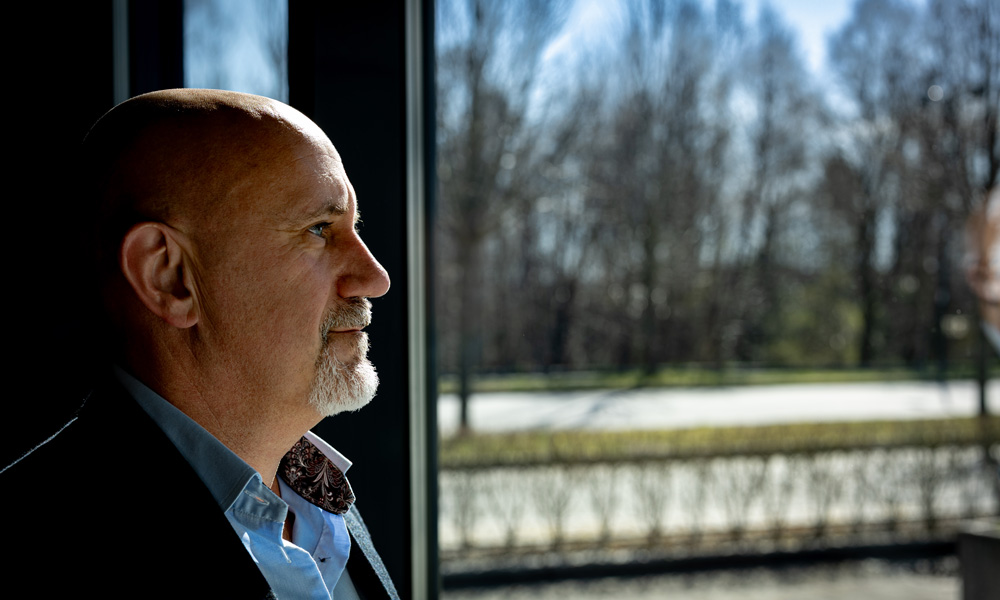
“In war or crisis, maintaining societal functions will be crucial. Schools, postal services, food production and fuel – everything must work. Petroleum activities are a part of this picture, and thus a natural part of total defence.”
Security strategy
The national security strategy and the white paper on total preparedness (Report No. 9 to the Storting (2024–2025) were presented in 2025. Both are of direct relevance to Havtil and the organisations within the agency´s remit, and contain important guidelines for the work on total defence.
The goal of the white paper is to ensure that civil society is prepared for crisis and war and to develop a society that supports military efforts and resists complex threats. The national security strategy builds on this foundation and outlines three main strategic priorities for how to strengthen our defence capability, make society more resilient and strengthen economic security.
Expectations
"For the petroleum industry, the expectations are very clear in both the national security strategy and the white paper on total preparedness. The documents establish that the business sector owns, operates and develops critical infrastructure, which plays a crucial role in our ability to ensure continuity in critical societal functions and for civil support for military operations," says Knudsen.
"The national security strategy underlines the need to strengthen our ability to protect and repair critical infrastructure on the shelf in close collaboration with our allies. For the petroleum industry, this means that the companies must understand the threat and risk landscape, recognise their own vulnerabilities and be able to maintain operations even during more serious incidents. There are clear expectations of self-preparedness, of good plans for recovery and of contributing to total defence through closer collaboration, information sharing and exercise drills with the authorities.”
Increased awareness
Knudsen encourages the companies to take advantage of the Total Defence Year to strengthen preparedness, collaboration and awareness of the threat landscape.
“Havtil will be a visible stakeholder in the Total Defence Year 2026. We will contribute to an increased understanding of what total defence is, of our role and of what is expected of the businesses within our sector," says Sigve Knudsen.
“Things are connected. Great demands are placed on companies, organisations and agencies, and on safeguarding societal functions. But resilience is also about individual actions. If you practise self-preparedness at home and are self-sustainable, this will in turn benefit your work environment, and thus society's ability to function when it really matters. Self-preparedness at an individual level results in less vulnerability, less strain on critical functions and greater room for manoeuvre in a crisis," Knudsen emphasises.
“In war or crisis, maintaining societal functions will be crucial. Schools, postal services, food production and fuel – everything must work. Petroleum activities are a part of this picture, and thus a natural part of total defence.”
National security strategy
The national security strategy outlines three main strategic priorities for safeguarding our fundamental national interests. In 2025, the government presented Norway's first national security strategy. This is an overarching and indicative document detailing how Norway should protect its fundamental interests at a time characterised by increased unpredictability and serious security challenges.
The strategy is based on six fundamental national security interests:
- A free and independent Norway
- A strong democracy
- A safe and trusting society
- An open and adaptable economy
- An allied community and unity in Europe
- A world that seeks solutions based on international law
The world has become a more dangerous and unpredictable place. Security policy gravity has increased, and there is deep uncertainty on multiple significant levels. The strategy points not least to Russia's war against Ukraine and its long-term consequences for global and European security. But there are also several other fundamental changes at play of major significance to Norwegian security and to our priorities.
To meet these challenges and safeguard our fundamental national security interests, the strategy outlines three key priorities:
- Rapidly strengthen defence capability: A more dangerous and unpredictable situation requires that we quickly strengthen defence capability nationally and in collaboration with our allies. We must allocate more resources to security, defence and emergency preparedness.
- Make society more resilient: We must strengthen our ability to prevent, detect and deal with threats, becoming better equipped to deal with serious incidents.
- Reinforce economic security: We must strengthen the competitiveness of the Norwegian economy, reduce vulnerabilities vis-à-vis countries with which we do not collaborate on security, and strengthen economic cooperation with our allies and partners.
Read all articles in Dialogue no. 1 - 2026:
Before the crisis hits

The threat assessment for Norwegian petroleum activities
Preparedness in their blood

Founders arming up
From bark beetles to NATO
Dual-purpose technology

Calls for a clear mineral strategy

New status for intervention
The network beneath the waves
Safe structures and robust material choices
Would you like to receive Dialogue in print completely free of charge? Send an email to dialogue@havtil.no and state how many copies you would like.