A JOURNAL FROM THE NORWEGIAN OCEAN INDUSTRY AUTHORITY
Dual-purpose technology
At a time when both energy security and national security are under pressure, the so-called dual-use approach has become increasingly relevant. Oceaneering, which has been supplying subsea technology and services to the Norwegian continental shelf for years, is now also developing solutions for the defence sector.
Published:
28.04.2026
Text: Olav Hove
Photo: Morten Gjerstad/Havtil
The supplier company Oceaneering houses a wide range of functions at its Forus facility outside Stavanger. The workshop oversees the production and maintenance of ROVs (Remotely Operated Vehicles; underwater vehicles). Autonomous modular containers are also installed here, underwater drones are calibrated, and new technological solutions are tested, adjusted and returned to operations.
This co-location facilitates taking technology from the idea stage, through testing and on to actual operation, without lengthy logistical links.
Recently, the workshop has adopted a new role. Technology is now being reconfigured and adapted to monitor cables, secure energy infrastructure and support military missions.
Video
Liberty
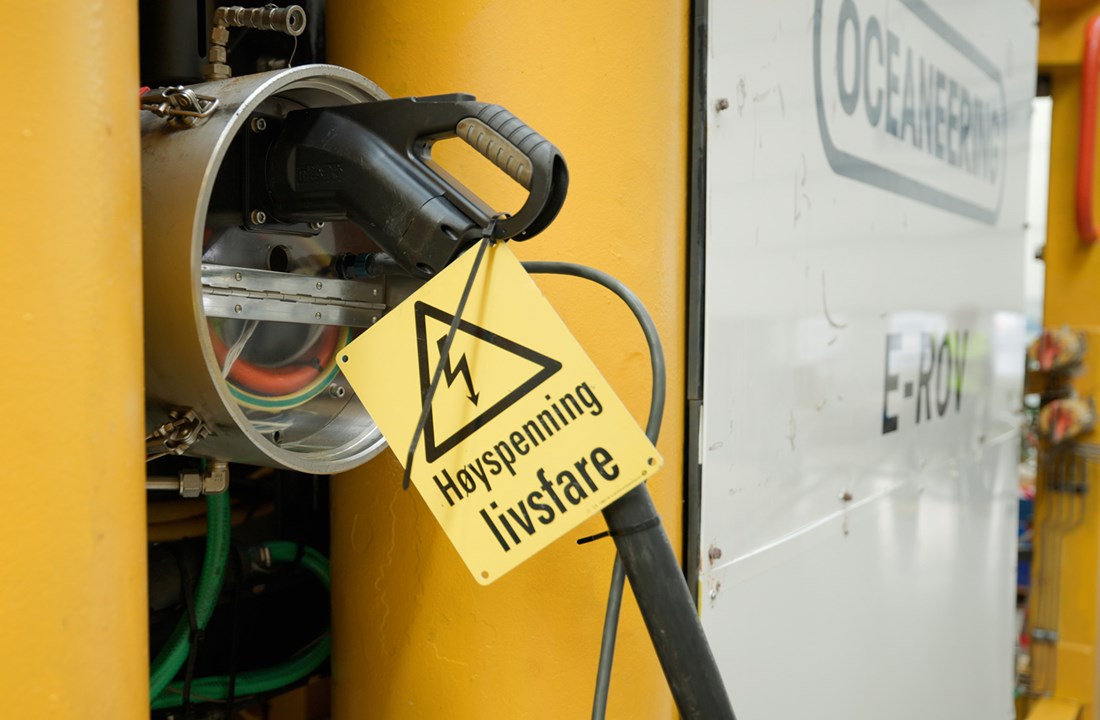
In the midst of one of the numerous workshop halls stands the Liberty system, a yellow underwater container that serves as a charging station, data logging point and home base for ROVs. The system includes a battery pack, communication solutions and mechanics for launching and receiving underwater vehicles.
ROVs can be connected to the system, charge, receive assignments, and conduct inspections or surveillance routines before returning to base.
Liberty was developed in Norway and is already in use on the NCS. The system allows for long-term operations without the need for a crew to be present. It can lie on the seabed for long periods of time and be activated as needed.
The technology is flexible. The same robot can be equipped with additional sensors and be used by defence entities for surveillance, situational awareness and securing critical infrastructure.
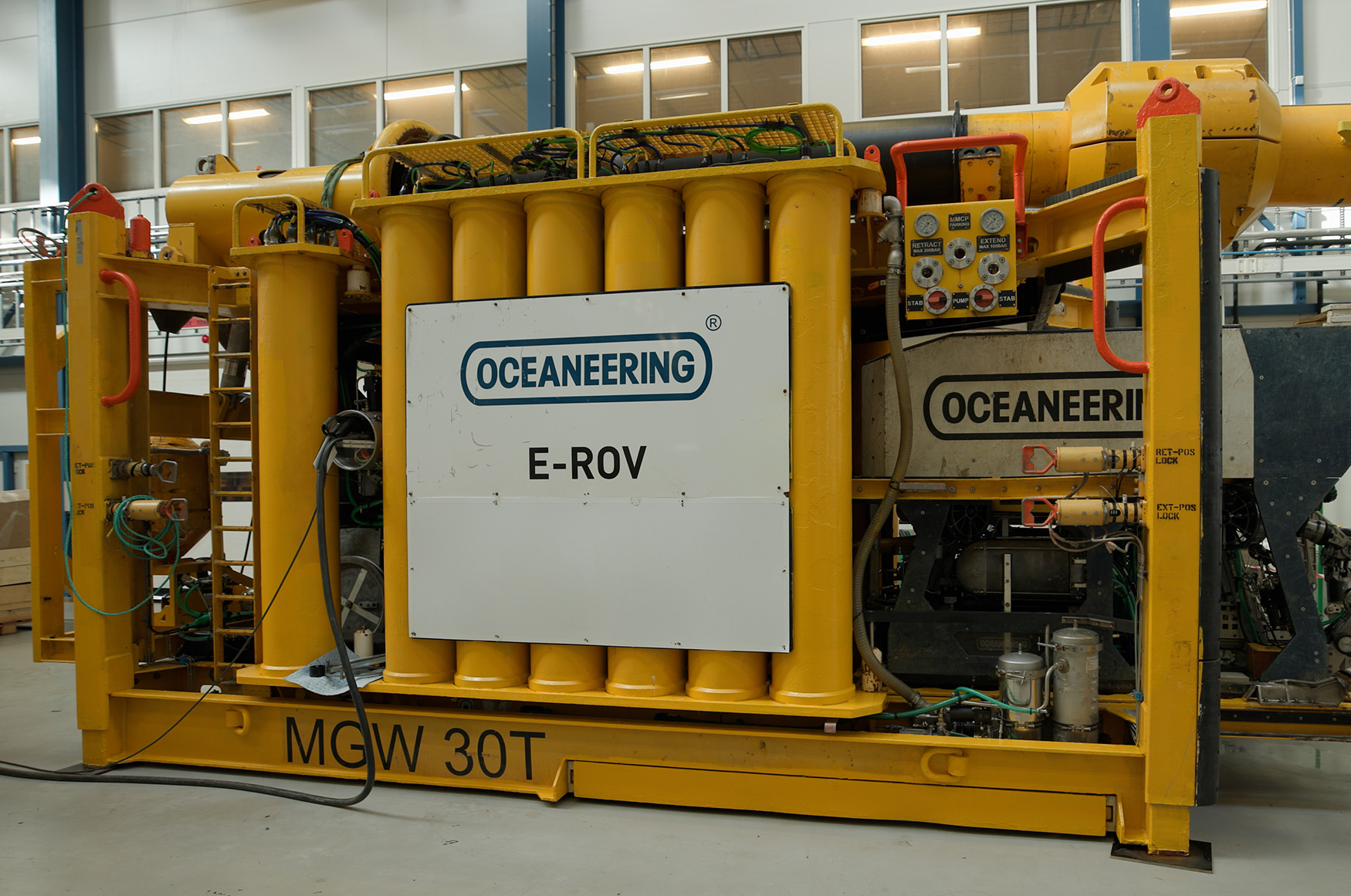
Oceaneering's Director of Product Development and Technology Innovation, Sindre Hegglund-Dalseth, explains that this functionality has led to increased interest from defence entities, as the same platform can be used for monitoring, detection and data collection from critical infrastructure such as cables, pipelines and installations.
“The transition to use in the Armed Forces mainly requires changes in sensors and mission modules, such as sonars, surveillance cameras or special equipment. The basic system is the same," explains Hegglund-Dalseth.
He adds that they often employ open industry standards and purchase sensor solutions from the market, where they are responsible for the integration.
ROV Technology
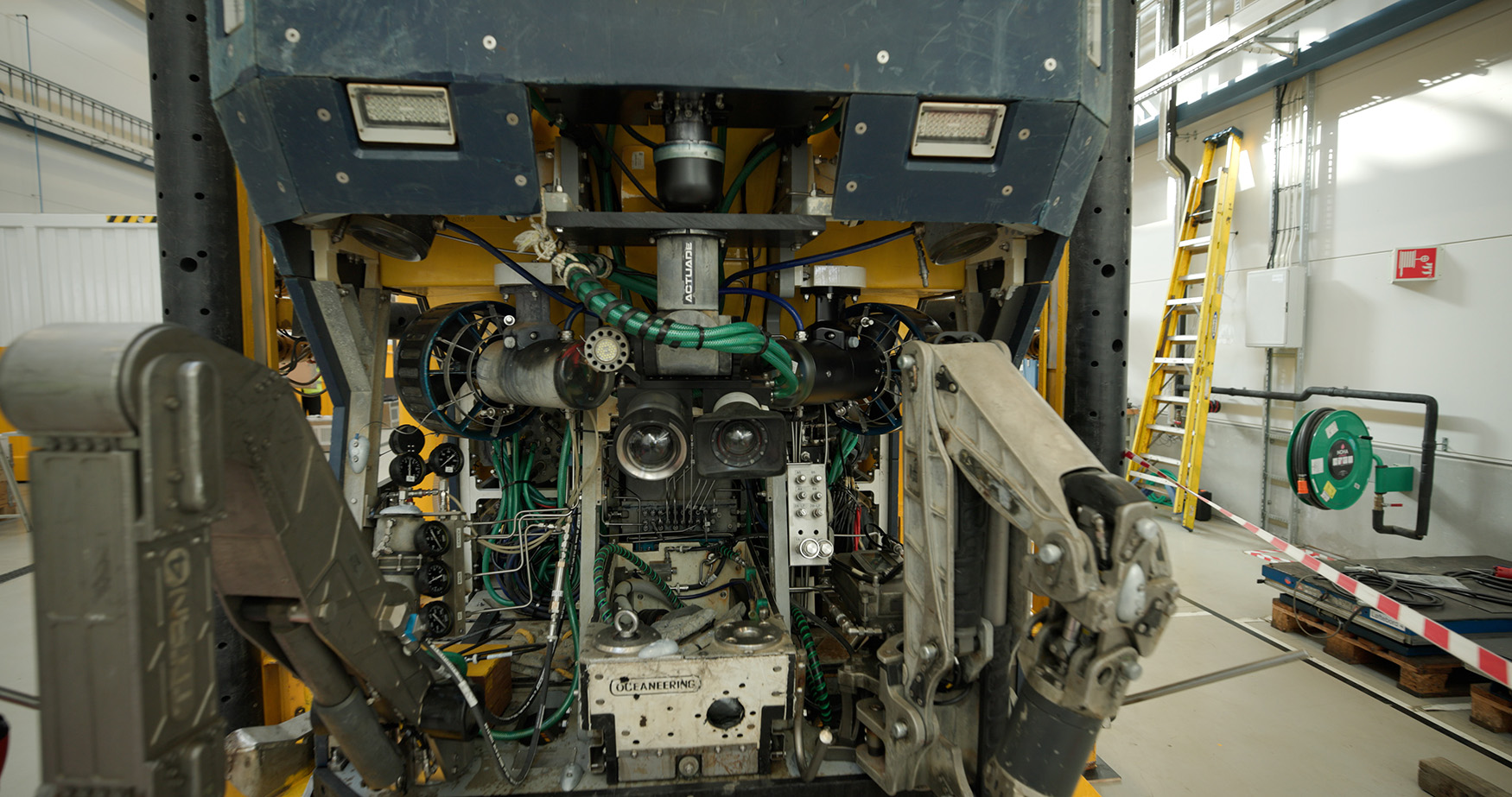
The ROVs used by Oceaneering in its daily energy-related operations are basically developed for tasks such as inspection, cutting, lifting, drilling and minor repairs on the seabed.
The ROVs can be operated from vessels offshore and via remote control through the Forus operations centre.
The modular nature of the systems enables the same basic platform to be used for both the energy sector and defence operations.
"This provides a natural link between the sectors, as the requirements for situational awareness, surveillance and maintenance of installations have clear commonalities," says Hegglund-Dalseth.
Operations center
The Onshore Remote Operation Center (OROC) is a key element of Oceaneering's operations. Here, pilots remotely control ROVs and other systems globally. The centre was established to transfer the workload from offshore to land.
"This allows for more predictable operations and reduced costs," says Christopher Lyon, Strategic Manager for Remote Operations at Oceaneering.
“Here, offshore operations take place, but on land. Everything that previously required a crew on a boat, we can now do from here. The pilots control the ROVs in real time; cutting, moving, welding and inspecting," he explains.
Lyon explains that the centre also serves as an ideal test arena for new software and digital solutions, precisely because the operations take place in a controlled, land-based environment.
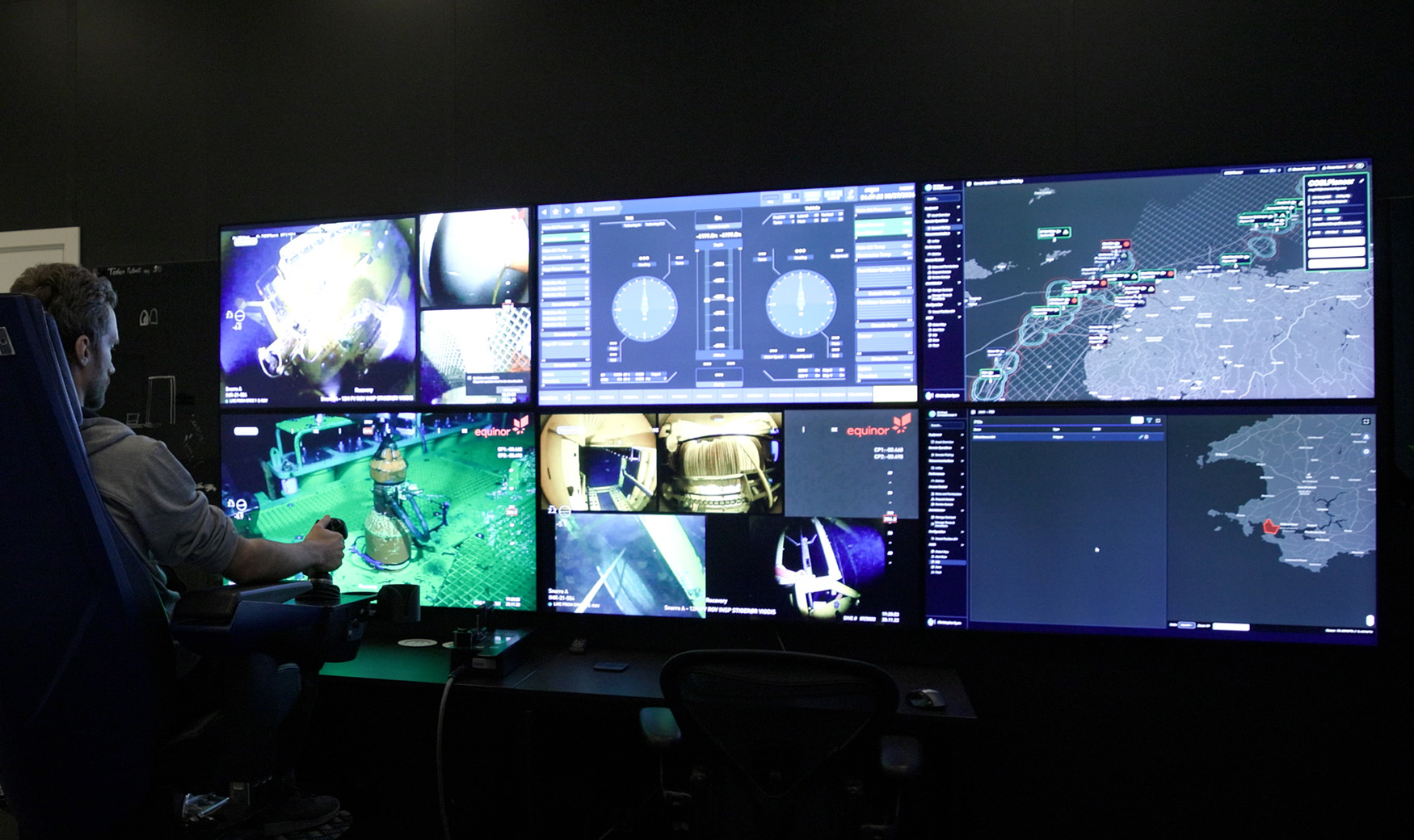
The operations centre features in-built physical and digital security. The premises are divided into security zones which are isolated from other areas of the building, and digital barriers such as network isolation, firewalls and access control have been introduced.
This level of security means that the centre can be adapted to use in the defence sector if needed. According to Lyon, a defence-specific control room could be added to the current structure, featuring separate networks and additional security.
"We are already monitoring critical infrastructure for oil and gas. We can do the same for national security," Lyon explained.
We are already monitoring critical infrastructure for oil and gas. We can do the same for national security.
Dual-use
The dual-use perspective refers to using the same technology, expertise or system both civilly and militarily.
At Oceaneering, this perspective has been developed over time. The company's U.S. operations have been supplying technology to the U.S. military for more than 40 years.
In Norway, the focus on defence-related application has increased over the past two to three years.
Gunnar Hilsen, global head of business development at Oceaneering, tells that entities such as the Norwegian Defence Materiel Agency and other national and international communities have shown a keen interest in the application of underwater technology as a part of total defence. This applies particularly to the surveillance of critical infrastructure and autonomous systems that can operate without continuous logistical support.
Hilsen adds that several foreign delegations have already visited the premises at Forus. The subsea threat landscape, the need for continuous monitoring and a growing dependence on the seabed as transport and energy infrastructure are influential factors.
"Technology such as the Liberty system and OROC can be used cross-sectorally without significant changes to the basic structure," Hilsen points out.
"It is easy to understand why this is generating interest in the defence sector. Having autonomous platforms that can operate far from land, with no detectable signature, crew or continuous logistics, is a strategic advantage," he states.
Technology such as the Liberty system and OROC can be used cross-sectorally without significant changes to the basic structure.
More articles from Dialogue no. 1 - 2026:
If the unthinkable should happen
Before the crisis hits

The threat assessment for Norwegian petroleum activities
Preparedness in their blood

Founders arming up

From bark beetles to NATO
Calls for a clear mineral strategy
New status for intervention
The network beneath the waves
Safe structures and robust material choices
Would you like to receive Dialogue in print completely free of charge? Send an email to dialogue@havtil.no and state how many copies you would like.