A JOURNAL FROM THE NORWEGIAN OCEAN INDUSTRY AUTHORITY
From bark beetles to NATO
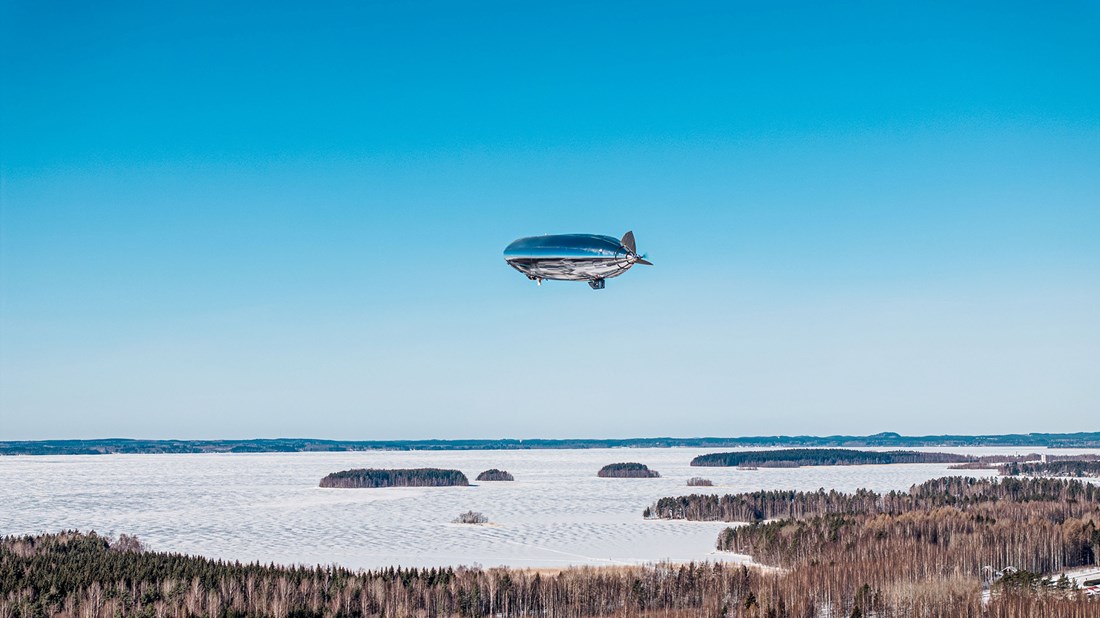
Finnish company Kelluu was founded to monitor Finnish forests. Then Russia invaded Ukraine. Today, the company's unmanned airships are participating in NATO exercises across three countries in a single month.
Published:
17.04.2026
Text: Eileen Brundtland
Photo: Harri Saynevirta
The first prototype was built in a barn in Reijola, a small village in eastern Finland, 90 kilometres from the border with Russia. The year was 2018, and founders Jiri Jormakka and Jouni Lintu asked themselves a smart question: drones offer high image quality but have limited range. Satellites cover enormous areas, but with lower resolution. Could an unmanned airship deliver both?
“Airships flew around the world 100 years ago,” comments Jormakka. "We started thinking: what if we combined lighter-than-air and unmanned aviation?
The forest as a starting point
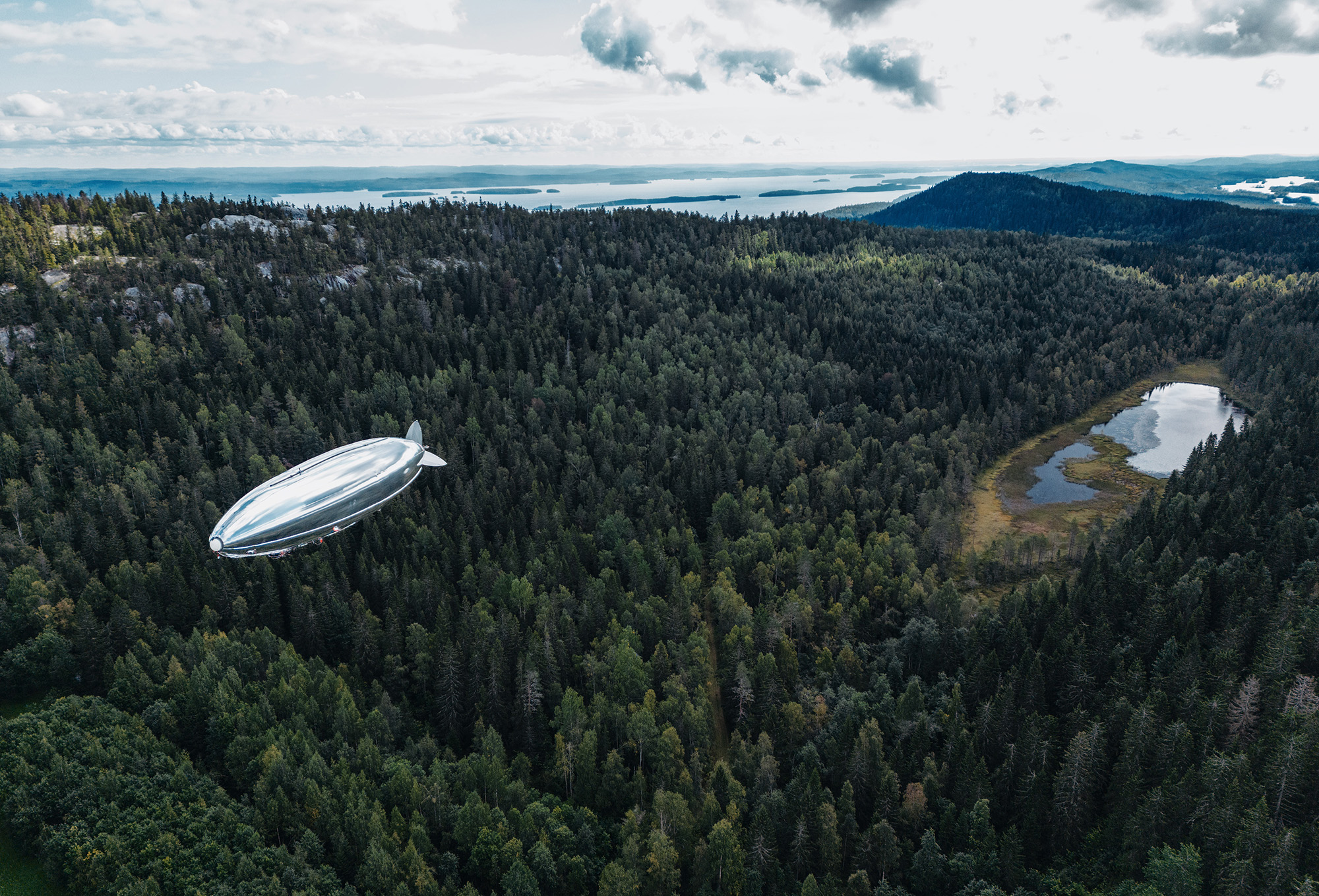
Their first customers were in forestry. Finland has vast forested areas, and the need for forest mapping is growing. With multispectral sensors on board, Kelluu's airship can identify trees infected by the spruce bark beetle.
"We see if the tree is infected before it dies. Together with the National Land Survey of Finland, we track its spread," says Jormakka.
Once the infested trees are identified, they can be felled early, preventing further damage.
Monitoring critical infrastructure came next: power grids, roads and railways. Services, not airships – that was the business model that companies were looking for.
New area of application
When Russia invaded Ukraine in February 2022, the Kelluu management team got together.
"We decided to explore whether our technology could support the defence sector in any way," says Jormakka.
The answer was yes. An airship that can remain airborne for over 24 hours, fly autonomously in Arctic conditions and deliver high-resolution data is useful far beyond forestry.
In 2024, Kelluu participated in NATO's DIANA programme for defence technology startups. After two selection rounds, the company earned a place in the programme, and with it, access to real exercises.
"In February, we took part in NATO exercises in three countries, including Norway’s Heimdall exercise, where the Armed Forces, research institutions and industry test technology in Arctic conditions," says Jormakka.
“You can imagine the number of UFO sightings posted on TikTok and Instagram,” he laughs.
Dual-use in practice
What makes Kelluu more than just a tech story is that dual-use was not a strategy, but a consequence. The same technology that maps the spruce bark beetles also detects new forest roads, logging sites and vehicle tracks.
"The mission can be civilian and military at the same time," says Jormakka. “They are not two separate worlds.”
The airships run on hydrogen – both as lifting gas and energy source – enabling year-round Arctic operations. Over 24 hours of flight time has already been achieved. The next goal is several days.
The plan ahead is mass production. Thousands of airships. To cover Northern Europe in high resolution, Jormakka estimates that around a thousand units would need to be on patrol.
"Then you have covered the whole of Northern Europe," he says calmly.

More articles from Finland:
Preparedness in their blood

Founders arming up
More articles from Dialogue no 1 - 2026:

If the unthinkable should happen

Before the crisis hits

The threat assessment for Norwegian petroleum activities
Dual-purpose technology
Calls for a clear mineral strategy

New status for intervention
The network beneath the waves
Safe structures and robust material choices
Would you like to receive Dialogue in print completely free of charge? Send an email to dialogue@havtil.no and state how many copies you would like.