A JOURNAL FROM THE NORWEGIAN OCEAN INDUSTRY AUTHORITY
Calls for a clear mineral strategy
Must we, should we, or can we permit ourselves to extract seabed minerals on the Norwegian continental shelf? Yes, says Professor Kåre Dahl Martinsen, who believes that security policy must play a far more significant role in the debate for or against mineral extraction.
Published:
05.05.2026
Text: Olav Hove
Photo: Elisabeth Kjørmo
- Sea bed minerals
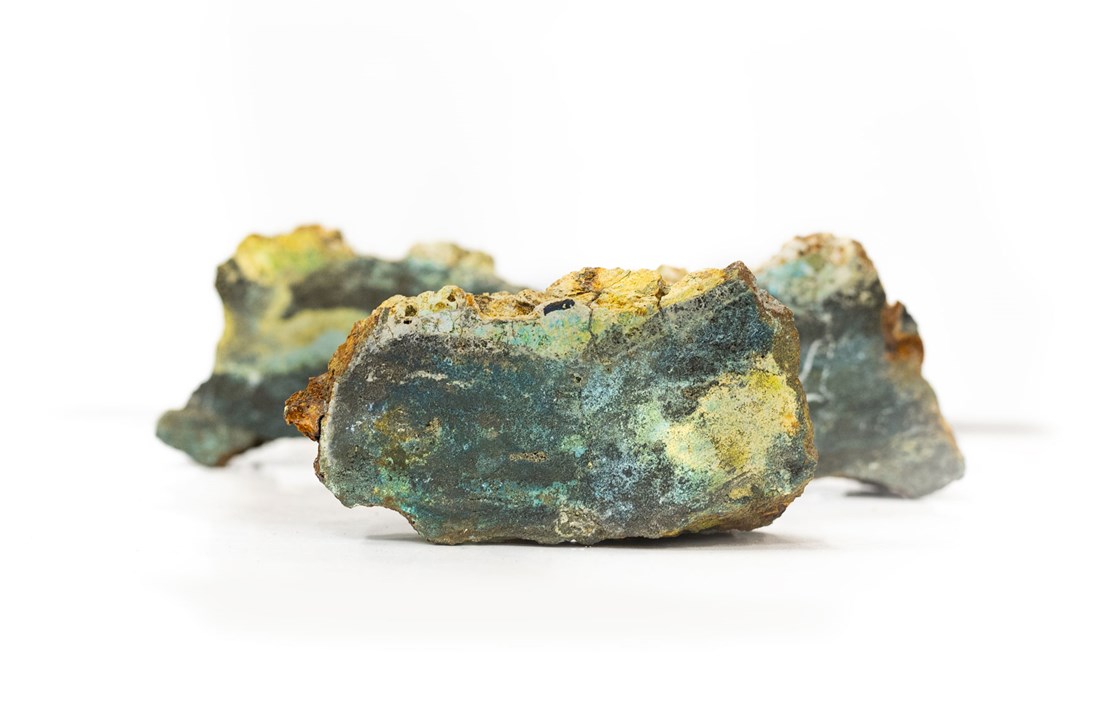
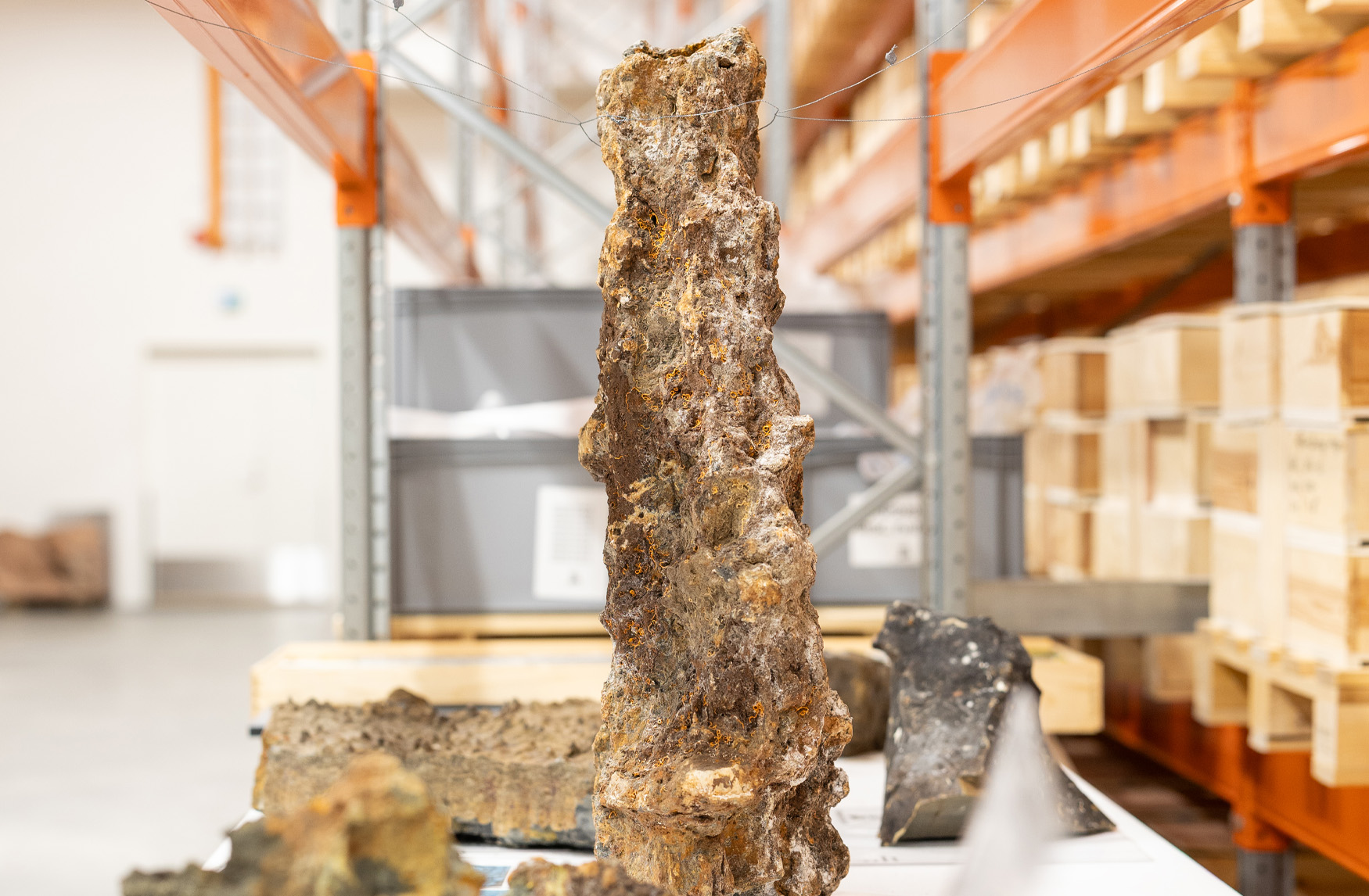
The Norwegian continental shelf contains important minerals and metals - such as cobalt, nickel, manganese, copper and rare earth elements (REEs). Seabed mineral extraction may be a future industry for Norway, but disagreement on the topic abounds.
Those against believe that we have insufficient expertise, that we have no idea of the environmental consequences and that mineral extraction may damage our reputation internationally.
Those in favour envision a new industrial adventure – the promise of a new oil boom and a strategic security policy muscle to flex.
Professor Kåre Dahl Martinsen, who is affiliated with the Institute for Defence Studies, is on the yes side. Under certain conditions.
In his new book "Mineralmangel", (“Mineral Shortage”), he outlines the possibilities, including the benefits that extracting seabed minerals can provide politically and economically.
However, if such an industry is to be profitable and sustainable, much work is needed.
Old mindsets
Dahl Martinsen views the debate, and the strong opposition to mineral extraction, as defined by inertia and outdated mindsets.
"We can´t refer to minerals solely as a part of the green transition," he emphasizes, indicating that there are many security policy aspects:
"It's about being able to make one´s own political decisions without risking China shutting off the mineral supply," he says.
He adds that China has used minerals on multiple occasions as a tool for political pressure, including against Japan in 2010.
Without our own mineral resources, we become vulnerable, he explains, and calls for a clear mineral strategy - in practice a national, security policy-based plan, where mineral extraction is seen as critical infrastructure.
Those against
“I am aware that there are major uncertainties. I am not saying that we should go for this at all costs, but we need to figure it out.”
“We must work on the issue. Research, test and find ways to extract whilst taking environmental considerations sufficiently into account.”
He maintains that since the arguments in favour of extraction are so compelling, we must strive to succeed in making it happen.
"Our own mineral supply will give us political influence and strategic gravitas. We can become part of a western supply chain at a time when minerals are becoming power politics. Also, industrial activity in our High North is an assertion of sovereignty.”
In terms of economics, he believes that the large deposits of REEs and minerals, such as in the Fens field and the Norwegian Sea, can guarantee long-term income and jobs.
“And we are set up for this. Norway has expertise from the oil and gas industry that is directly transferable in terms of technology, subsea expertise and deepwater operations experience.”
Much work is needed
If mineral extraction is to become a new industrial adventure, it will take more than good environmental impact assessments and data collection.
“We need clearer government coordination. A political willingness to assess the mineral debate at all levels is paramount. It is currently extremely polarized,” he says.
We need to take environmental advice extremely seriously. Thorough impact assessments must be carried out in the fields of health, safety and the environment, but we cannot opt out in advance.
The professor lists numerous points he believes must be put in place quickly so as not to fall behind as a mineral-producing country:
“We need a national mineral strategy linked to national security to build stable framework conditions for extraction on land and at sea. We must be tech-driven and keep a close eye on international developments, especially in Japan and the US, which are both investing heavily.”
Finally, he stresses the importance of keeping an open mind, and of keeping the mineral debate knowledge-based:
“We need to take environmental advice extremely seriously. Thorough impact assessments must be carried out in the fields of health, safety and the environment, but we cannot opt out in advance.”
Havtil and seabed minerals
Havtil has regulatory responsibility for safety and emergency preparedness in the event of future extraction of seabed minerals on the NCS.
Our work on seabed minerals relates first and foremost to building a solid knowledge base and helping to ensure that any future industrial activity can be carried out safely and responsibly.
Efforts are directed towards three main areas: Knowledge acquisition for our regulatory perspective, contribution to the industry's understanding of risk factors connected with such deepwater operations, and the development of the necessary area knowledge to establish proper safety and emergency preparedness.
Roar Sognnes is head of Havtil's interdisciplinary seabed minerals team. He says that a large part of the current work relates to obtaining further data on the conditions in the northern Norwegian Sea and the Greenland Sea. Havtil collaborates with the Norwegian Meteorological Institute, among others, on analyses of weather, wind and current conditions.
"We have also established a good dialogue with shipping companies, research communities and other agencies that have operated in the area for many years, to learn from their experiences with offshore operations far from shore," says Sognnes.
Focus on emergency preparedness
Emergency preparedness is a particularly important focal point. Experience from international stakeholders who have carried out test production in the Pacific Ocean shows that distances and challenges with helicopter access, combined with demanding Arctic weather conditions, place stringent demands on safety plans.
Havtil is therefore analysing what is needed to establish sound contingency plans from an industry perspective.
The goal is clear: If seabed mineral extraction becomes a new industry on the NCS, it will be a world leader in health, safety and the environment.
More articles from Dialogue no. 1 - 2026:
If the unthinkable should happen
Before the crisis hits

The threat assessment for Norwegian petroleum activities
Preparedness in their blood

Founders arming up
From bark beetles to NATO
Dual-purpose technology

New status for intervention
Safe structures and robust material choices
The network beneath the waves
Would you like to receive Dialogue in print completely free of charge? Send an email to dialogue@havtil.no and state how many copies you would like.