- Resilience begins with leadership
Energy has become a matter of security policy. For Louise Dedichen, that means leaders must think differently about risk, preparedness and cooperation.
Published:
02.09.2026
Text: Eileen Brundtland
Photo: Elisabeth Kjørmo/Havtil
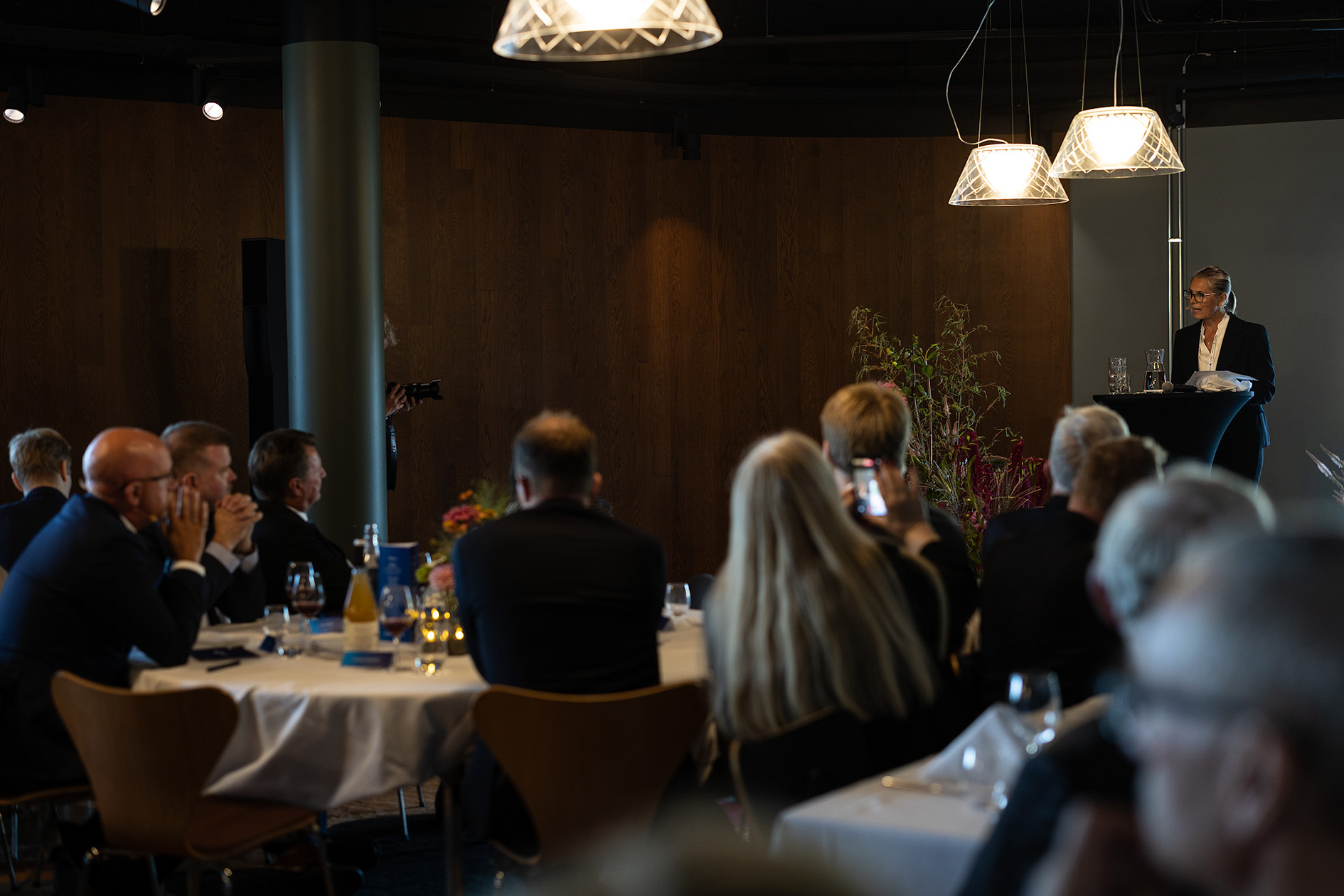
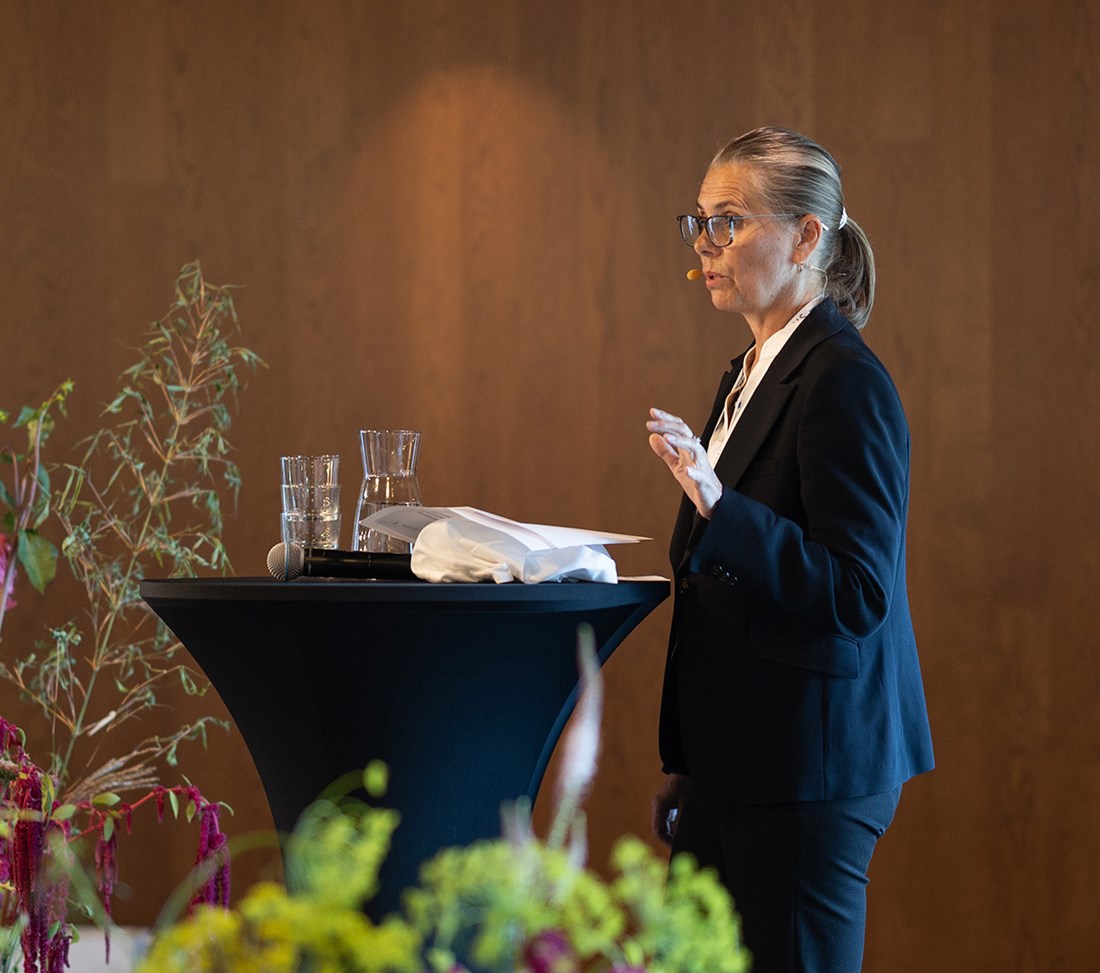
The war in Ukraine, sabotage of critical infrastructure and growing geopolitical rivalry have transformed Europe’s energy landscape. This formed the backdrop to Louise Dedichen’s keynote address at ONS Safety Lunch 2026.
For four years, Vice Admiral Louise Dedichen represented Norway on NATO’s Military Committee. As Head of the Norwegian Military Mission in Brussels, she was closely involved in the decisions, assessments and discussions that have shaped the Alliance’s understanding of Europe’s security challenges. Few Norwegian leaders have observed the security developments of recent years from such close quarters.
"For many years, we were able to speak about energy as an economic sector. We discussed markets, investments, technology, sustainability and efficiency. All of that still matters. But today, energy has also become a core arena of national and allied security."
Norway’s role as a stable energy supplier to Europe gives the country strategic importance, but also greater exposure.
"Our infrastructure can be watched, tested or disrupted; our companies can face pressure; our people and decisions now sit closer to the centre of the security picture than before."
That importance is reinforced by geography. Norway is a key hub in the High North, with extensive energy infrastructure. As a result, what happens in Norwegian waters, ports, airspace and on the seabed matters far beyond the country’s borders. NATO's Arctic Sentry underlines this point. It signals that the Arctic and the High North are no longer peripheral; they are central to allied deterrence and defence.
"The main threat to NATO and Norwegian security today is Russia. Threat number two is terrorism," Dedichen said.
Below the threshold of war
Yet it is not necessarily open warfare that concerns her most. Pressure and influence can be exerted through cyber-attacks, sabotage, intelligence activities, influence operations or threats to critical infrastructure.
"Hostile activity can stay below the threshold of war while still creating real security consequences."
The Nord Stream explosions and incidents involving the EstLink connection between Finland and Estonia illustrate how pipelines, power cables and communications links have also become part of the security landscape.
"These are not abstract risks. They are warnings from our own neighbourhood: the seabed has become a strategic domain."
At the same time, recent developments show how allies can respond quickly when critical infrastructure is threatened. Following the damage to EstLink 2, the UK surveillance system Nordic Warden was deployed through the Joint Expeditionary Force to strengthen monitoring of subsea infrastructure, demonstrating the value of cooperation among like-minded Northern European nations.
When geopolitics meets economics
According to Dedichen, the distinction between economics and security policy is becoming increasingly blurred.
"Energy prices, supply chains, industrial capacity, ports, cables, technology, ownership and investment are no longer purely economic questions. They are instruments of power - and sometimes targets of pressure."
She points to the Strait of Hormuz as one example of how instability far from Norway can affect energy prices, logistics, investment and energy security in Europe.
The implications extend beyond markets alone. From a NATO perspective, energy is not merely a societal function. Modern defence capability depends on secure access to energy, logistics, digital systems and critical infrastructure. Protecting energy installations, pipelines, cables and terminals has therefore become part of the broader security picture.
For the energy industry, this means that geopolitics must become an integral part of corporate governance and strategic decision-making.
"For leaders in the energy sector, geopolitical awareness must therefore become practical. It must influence scenario planning, supplier diversification, strategic reserves, secure logistics and faster decision-making under uncertainty."
At the same time, she warns against viewing preparedness and robustness as costs that stand in the way of efficiency.
"Resilience is not inefficiency. It is the price of continuity in a more contested world."
Energy prices, supply chains, industrial capacity, ports, cables, technology, ownership and investment are no longer purely economic questions. They are instruments of power - and sometimes targets of pressure.
Total defence
The energy sector also plays a central role in Norway’s total defence concept.
"In the new security situation, all industries are linked much tighter than before. Energy, defence, maritime transport, technology, finance, construction, telecommunications and local communities are part of the same resilience chain. A weakness in one sector can quickly become a vulnerability for the whole country."
"For the energy sector, total defence means knowing in advance what support society may need from you, what support you may need from others, and who has the authority to decide when time is short. It means testing plans, sharing situational awareness, clarifying roles and practising decision-making under pressure - not only for accidents, but for security-policy crises and war-related scenarios."
Credible allies
One issue Dedichen chose to highlight was Norway’s relationship with its closest allies.
"We should ask the difficult question: can we trust our allies - the United States and the United Kingdom? My answer is yes, but not in the old, comfortable sense that someone else will carry the burden for us."
Trust between allies also depends on each nation’s own contribution.
"We can trust our allies when we are credible allies ourselves: when we invest, prepare, share risks and bring real capacity to the table. We should trust our allies, but we can never leave the responsibility for defending our country and all our resources to others."
Leadership and courage
The message is clear: security cannot be something organisations begin discussing only after an incident has occurred. Dedichen therefore urges leaders to address security issues regularly, strengthen cooperation across sectors and build a strong security culture within their organisations.
Whether the challenge comes in the form of war, sabotage, cyber-attacks or geopolitical instability, the conclusion is the same: resilience must be built before a crisis emerges.
For Dedichen, leadership is therefore the most important preparedness resource of all.
"Leadership requires courage. Not the loud kind of courage, but the steady courage to make the right decisions before they become obvious."
"In this new security situation, leadership is the first layer of resilience - and courage is the key. Courage to prepare before the crisis. Courage to invest in resilience even when the returns are not immediately visible. Courage to trust each other, connect across sectors and make security a shared responsibility every day - not only when the alarm sounds."