A JOURNAL FROM THE NORWEGIAN OCEAN INDUSTRY AUTHORITY
Exercise in uncertainty
When the indications are unclear, the consequences can be major and no one knows for sure what has happened, situational awareness becomes crucial. That was the challenge facing the operators during the Grey Dawn Petroleum cyber exercise.
Published:
19.11.2026
Text: Eileen Brundtland
Photo: Elisabeth Kjørmo
It starts with weak signals: news reports of cyber attacks on critical infrastructure in Europe, warnings of vulnerabilities and GPS jamming at sea.
Factor in that Europe's dependence on Norwegian gas is growing, and a threat actor announces planned campaigns targeting European gas supply infrastructure.
None of the incidents directly affect the fictitious operating company Storvik Petroleum. Nevertheless, they create uncertainty. Are the incidents connected? Are these isolated episodes, or the first signs of something bigger?
No one has the whole picture
Such was the basis for Grey Dawn Petroleum, a tabletop exercise arranged jointly by KraftCERT and Havtil in the autumn of 2026. The major operating companies on the Norwegian continental shelf were tasked with countering a serious cyber incident - under time pressure and with limited information.
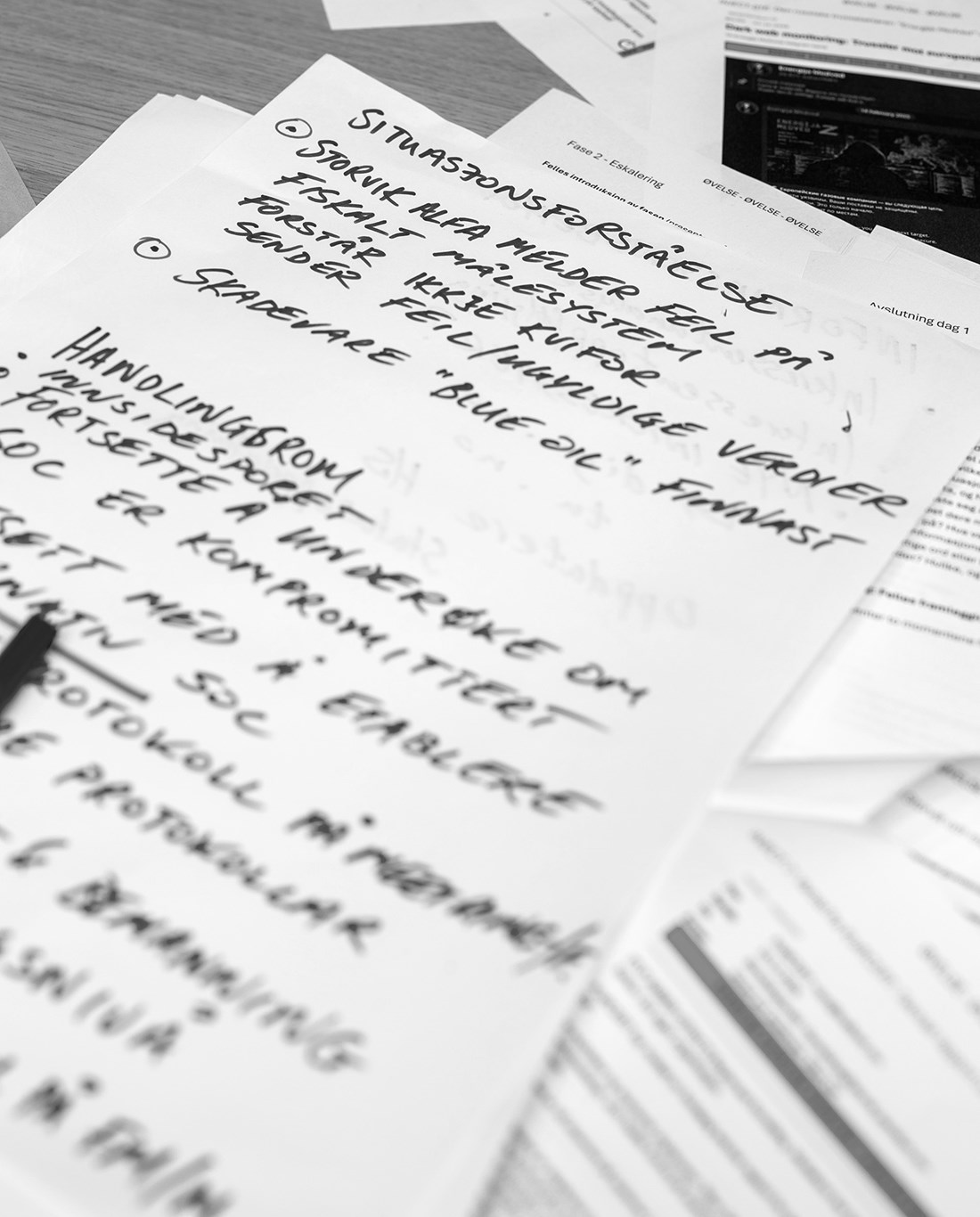
In the scenario, the monitoring system of a central supplier was compromised. The consequences for business activities were unclear. The fiscal metering system eventually began experiencing errors, and the company had to switch to manual metering.
At the same time, information emerged potentially indicating that malware had been installed in the systems.
For the participants, the challenge centred swiftly around more than technology. They had to make decisions before the cause and scope were ascertained. What did they factually know? What was based on assumptions? What measures should be taken, and when?
"It's about creating a holistic understanding," explains exercise leader Bjørn Tore Hellesøy from KraftCERT.
“Incidents involving digital systems can have several possible explanations, and it can take time to clarify what has actually happened. The companies must keep several options open simultaneously, including whether the incident is due to technical system issues or is intentional. This makes the situation difficult to handle.”
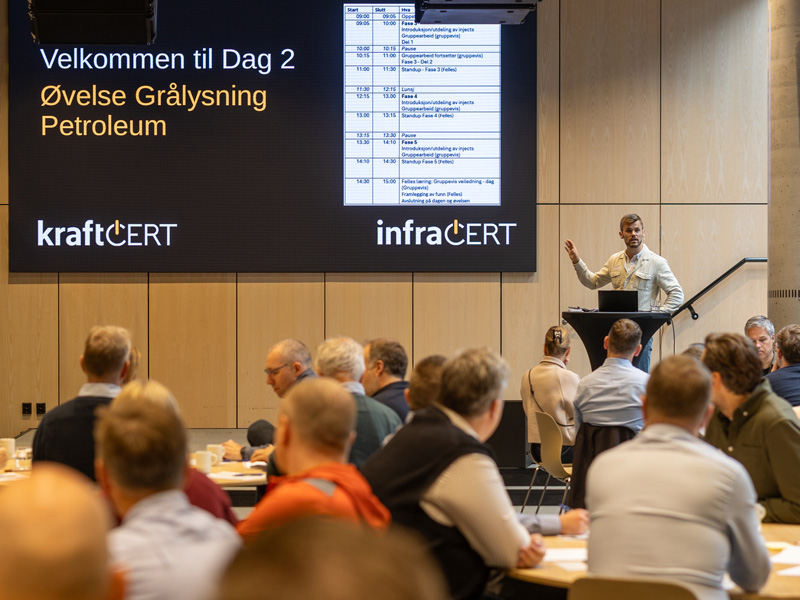
The participants in the exercise came from different professional backgrounds. Some worked with IT systems (data and information), others with OT systems (control and monitoring of physical processes and machines). Some represented plant and operations managers, others represented emergency preparedness, security or communication.
Everyone was presented with the same situation but viewed it from different professional angles.
"The various professional communities have different traditions and use different concepts and models. In an exercise of this nature, what needs to be interpreted or translated between the different disciplines becomes clear," says Hellesøy.
"No single individual has the whole picture. Therefore, collaboration between professional communities is crucial. A good situational awareness is strengthened when multiple disciplines collaborate, both internally within the companies and between the companies.”
Learning from each other
Hellesøy points to information sharing as an important prerequisite when the situation is unclear.
"The petroleum industry has a long tradition of cooperation in the field of safety and major accident risk. The goal is to implement more of this culture of cooperation in our work on cyber and security.”
A common understanding of the incident is not only developed through systems and analyses, but also through collaboration and relationships.
"When a real incident occurs, being familiar with the individuals in other companies and with the authorities is a real advantage," he says.
No single individual has the whole picture. Therefore, collaboration between professional communities is crucial. A good situational awareness is strengthened when multiple disciplines collaborate, both internally within the companies and between the companies.
Grey Dawn Petroleum was not just about handling an incident, but also about giving the participants the opportunity to compare how different companies and professional communities assess the same information.
Each table in the exercise was composed of participants from several operating companies. Throughout the scenario, they had to assess information, prioritise measures and make decisions along the way. The groups then convened to discuss the choices they had made.
For Per Atle Vagle, head of cyber defence in Equinor, this sharing of experience was one of the most significant aspects of the exercise.
"This type of scenario is both current and realistic, and the exercise provides good training in cross-company collaboration. It was useful to hear how the other groups assessed the situation, and why they made different choices from ours´. These types of discussion provide new perspectives that we can bring back to our own business," he says.
Harald Kvernstrøm, emergency preparedness advisor at Aker BP, has a similar take on the exercise.
"We get to calibrate ourselves against each other and see how different operators and organizations relate to the same rules, solutions and requirements," he says.
At the same time, he emphasizes that the value of the exercise will only be fully realized once the lessons learned are followed up.
"It's one thing to sit and discuss. Learning doesn’t happen until we succeed in subsequently implementing changes. We have identified many good points through the exercise. Now it's about putting them into practice.”
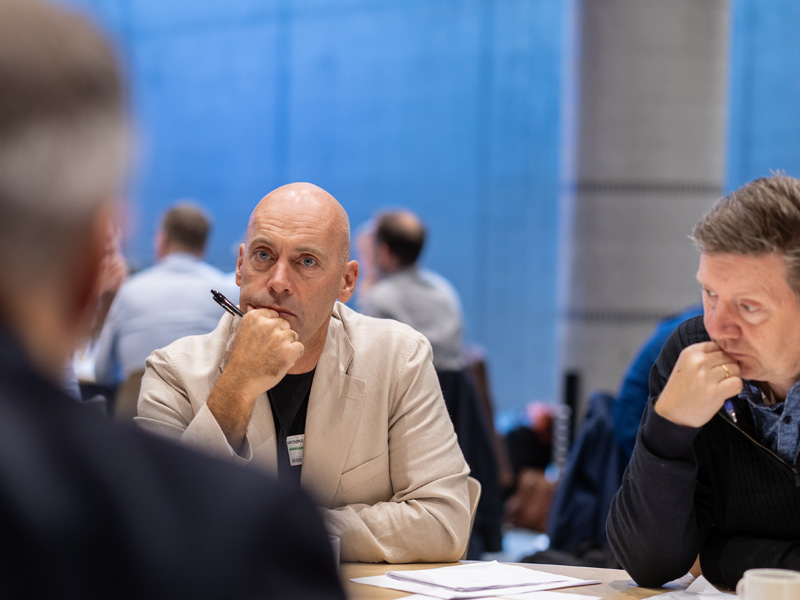
The petroleum industry has a long tradition of cooperation in the field of safety and major accident risk. The goal is to implement more of this culture of cooperation in our work on cyber and security.
Business activities are the first line of defence
Large sections of the critical, digital infrastructure in Norway are owned and operated by private companies. When serious cyber incidents occur, it is therefore the companies themselves that are the first line of defence.
"The companies' digital preparedness is crucial to Norway's resilience," says Kristian Solheim Teigen at Havtil.
Early warning and sharing of information are important to limit consequences and coordinate efforts. This is particularly important in the petroleum sector, where the degree of interconnection and interdependencies related to the production and transport of energy means that even incidents of apparently limited scope can swiftly develop into broader disturbances with consequences reaching far beyond individual business activities.
"In the event of digital incidents, it is essential that the companies establish a good situational picture early on. This provides a basis for the correct measures, better coordination and relevant information sharing between the actors affected. The exercise illustrates how important it is to further develop strong professional communities with capacity, continuity and sector understanding, while simultaneously establishing frameworks enabling efficient cooperation across businesses, disciplines and sectors.
"This is a lesson we will take with us in continuing to develop KraftCert as an operational sector response environment and Havtil as an emergency response organisation," says Teigen.