A JOURNAL FROM THE NORWEGIAN OCEAN INDUSTRY AUTHORITY
The network beneath the waves
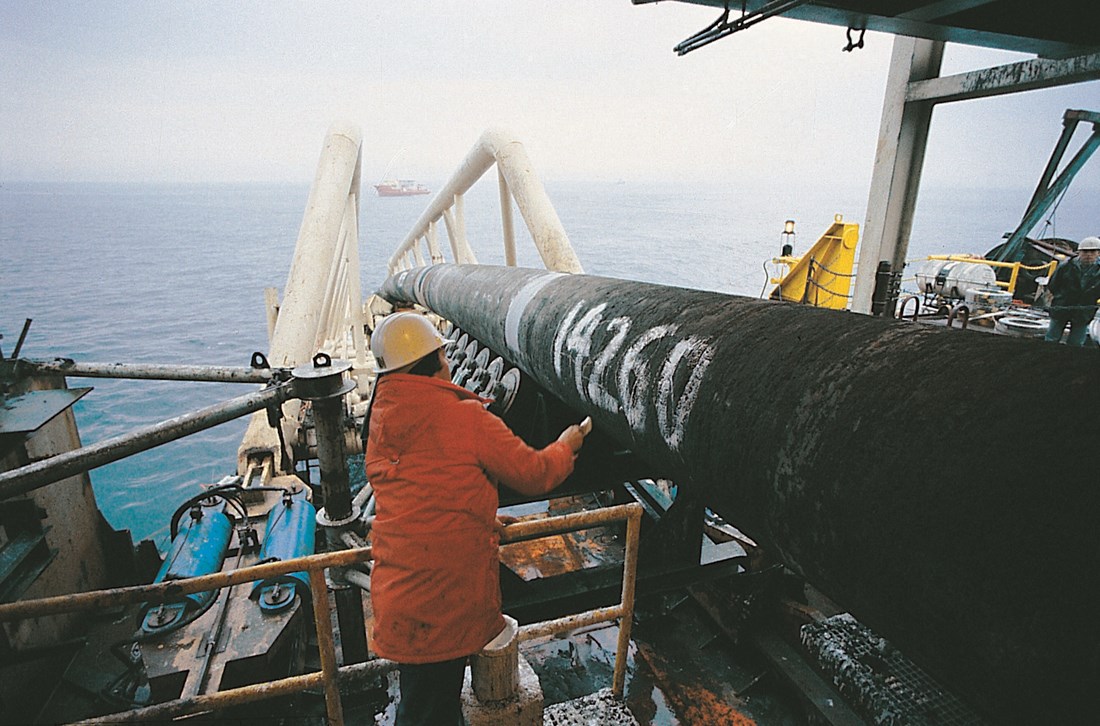
The development of subsea pipelines on the Norwegian Continental Shelf started as a direct consequence of the Ekofisk discovery in 1969. In order to produce at scale, oil and gas had to be transported safely and continuously to market, something which ships alone could not achieve.
Published:
23.02.2026
Text: Olav Hove
Photo: Leif Berge /Equinor
- Structural safety
In the 1970s, LNG technology was not well developed and pipelines were the only realistic means of exporting natural gas in large volumes and over long distances.
The 10 oil commandments stated that, in order to develop Norwegian industry and expertise and create jobs in Norway, all oil and gas from the Norwegian Continental Shelf should, as a general rule, be landed in Norway.
An insurmountable obstacle?
But when it came to Ekofisk, there was an obstacle: the Norwegian Trench. At that time, there was no technology that could lay pipes in the 100-kilometre-wide, 700-metre-deep trench off the coast of southern Norway. As a result, oil was piped to Teeside in the UK and gas to Emden in Germany, through the Norpipe pipeline system.
But the Norwegian petroleum policy, which emphasised national control and the landing of production at Norwegian onshore facilities, remained firm. This led to the construction of processing plants such as Kårstø, Kollsnes, Mongstad, Sture and Nyhamna.
1985 saw the opening of Statpipe, the first pipeline to bring gas ashore in Norway. It ran from the Statfjord field to Kårstø in Rogaland. The Norwegian Trench, once thought to be an insurmountable obstacle, was crossed for the first time.
Network
The idea behind the pipelines was that they should form part of an integrated system, from single pipes to a coherent network, with several fields using the same infrastructure. And from the 1990s onwards, the system evolved to do precisely that.
For Statpipe, this means that it now consists of a total of four pipelines, which transport gas from Statfjord and Gullfaks via the processing plant at Kårstø, on to the Draupner S platform in the southern North Sea, and finally through Norpipe to Emden. Draupner is a hub in the pipeline network and has the function of mixing sales gas from various sources and exporting it to the market in Europe.
Over the course of almost 50 years, a network of pipelines has emerged which now constitutes a coherent system that exports oil and gas from more than 90 fields. The network of pipes has required advanced engineering and covers long distances, in water as deep as 1,300 metres. Havtil has supervisory responsibility for more than 18,000 kilometres of this network for the transport of natural gas, oil and condensate.
Podcast
If you want to learn more about how this extensive network came about, the decisions that lay behind it, and how it works in practice, then be sure to listen to the first two episodes of season 3 of our podcast series Reflections on Norway's oil story (in Norwegian only).