A JOURNAL FROM THE NORWEGIAN OCEAN INDUSTRY AUTHORITY
More than two decades of building trust
The trends in risk level in the petroleum activity (RNNP) process is the product of a vision, a dedication and a formidable commitment. But its birth was anything but auspicious.
Published:
17.03.2026
Text: Inger Anda
Photo: Marie von Krogh
- RNNP
- Risk management
In the late 1990s, the members of the recently established Safety Forum disagreed sharply over whether safety was rising or falling. This issue prompted long and heated discussions, with the unions convinced that safety was in decline and the employers insisting it had never been better.
As the regulator, the Norwegian Ocean Industry Authority (then part of the Norwegian Petroleum Directorate – NPD) was uncertain about the real picture.
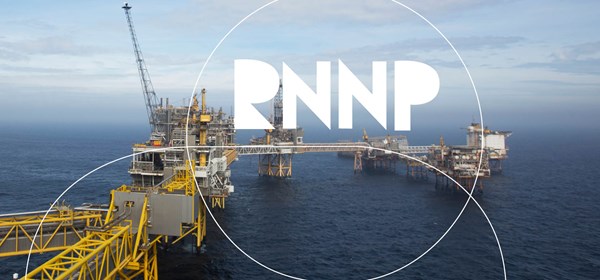
RNNP 2025
Systematise
The Safety Forum, as the most important arena for tripartite collaboration on this issue in Norway’s oil sector, established a project to identify and systematise data on the safety level.
The aim was to give the parties an answer they could agree on, and thereby provide a tool for information about and management of safety work. Many contributors with great expertise on risk and safety took part – operator companies, other petroleum-sector players, government, consultants, scientists and educational bodies.
Preliminary work began in 1999-2000 and, as mentioned above, the first report could be presented in 2001. It lived up to expectations.
All sides nodded in agreement when the extensive presentation was laid before them. This collaborative project had succeeded in establishing credible figures and a shared view of reality.
Safety Forum members could now drop their time consuming discussions on which way things were headed, and concentrate instead on the facts revealed by the RNNP.
They also agreed to continue developing the tool and the method.
The pilot report presented two decades ago was no less than unique. Nothing to equal it is thought to exist either in Norway or internationally – whatever the industry.
Extended
The first report looked only at NCS facilities. In 2002, the process was extended to a questionnaire-based survey to determine how offshore workers experienced risk and the safety culture.
Interviews were also conducted with selected representatives of the parties and other industry specialists.
The aim was to supplement the picture provided by facts and figures with views and information from the people with personal experience of the realities. Since then, the questionnaire-based survey has been conducted every other year.
Division
The Storting (parliament) decided in 2004 on a division of the NPD, with the newly established PSA responsible for safety in the petroleum sector and the NPD retaining responsibility for managing oil and gas resources on the NCS.
In the same year, the PSA was given supervisory authority over safety at Norway’s eight onshore petroleum plants, from Melkøya in the north to Slagentangen in the south-east.
That meant these units also had to be integrated in the RNNP, and the first overall review of both offshore and onshore activities appeared in 2006.
Spills
The process was further extended in 2010, when a separate report on acute spills (AU) was included in the family. This communicates information on incidents, near-misses and assessments of accident risk related to environmental discharges.
For technical reasons, the RNNP AS overview appears several months later than the rest – usually in September.
Taken together, the overall annual RNNP package comprises about 450 pages of statistics and takes some 3000 working hours to prepare in the PSA alone.
Attention
The RNNP reports have attracted great attention from the start, both in the industry and among the Norwegian public.
They represent the most important source for monitoring how risk is developing in the petroleum sector and how the industry is working on safety.
These reports form the basis for identifying where the biggest problems lie and thereby how the parties in the industry should work to improve safety – both collectively and at company level.
Knowledge of risk and what makes the biggest contribution to safety is much higher than 20 years ago, and risk understanding has also greatly improved.
A joint effort has yielded good results.
Disagreement
Although support for the RNNP as a tool must be regarded as unison today, disagreement also emerges – every year. This relates not to the credibility of the data but to which figures, trends and results are the most important, and which perspective should be applied in reading and understanding them.
Both the big support for the RNNP and the debate between the parties over its interpretation are certain to continue year by year. But such controversies also play an important part in attracting attention and commitment to making constant improvements in safety conditions for the petroleum industry.
This article was first published in Dialogue no. 1-2021.