A JOURNAL FROM THE NORWEGIAN OCEAN INDUSTRY AUTHORITY
The price of experience
Roy Erling Furre has weathered a few storms, from strikes and internal conflicts to the Sleipner accident and the establishment of the Safety Forum. Now he shares his experiences that helped shape the tripartite cooperation within the petroleum industry - and what they have cost.
Published:
05.12.2025
Text: Olav Hove
Photo: Elisabeth Kjørmo/Havtil
- Tripartite collaboration
“It's probably safe to say that I´m a robust type.”
The contrast between Roy Erling Furre's personality and professional life is striking. He has just spoken with calm composure about his role as a key trade union representative. He is proud - and not least amazed - that he has managed to stand tall through it all.
Because both work and life have come at a price.
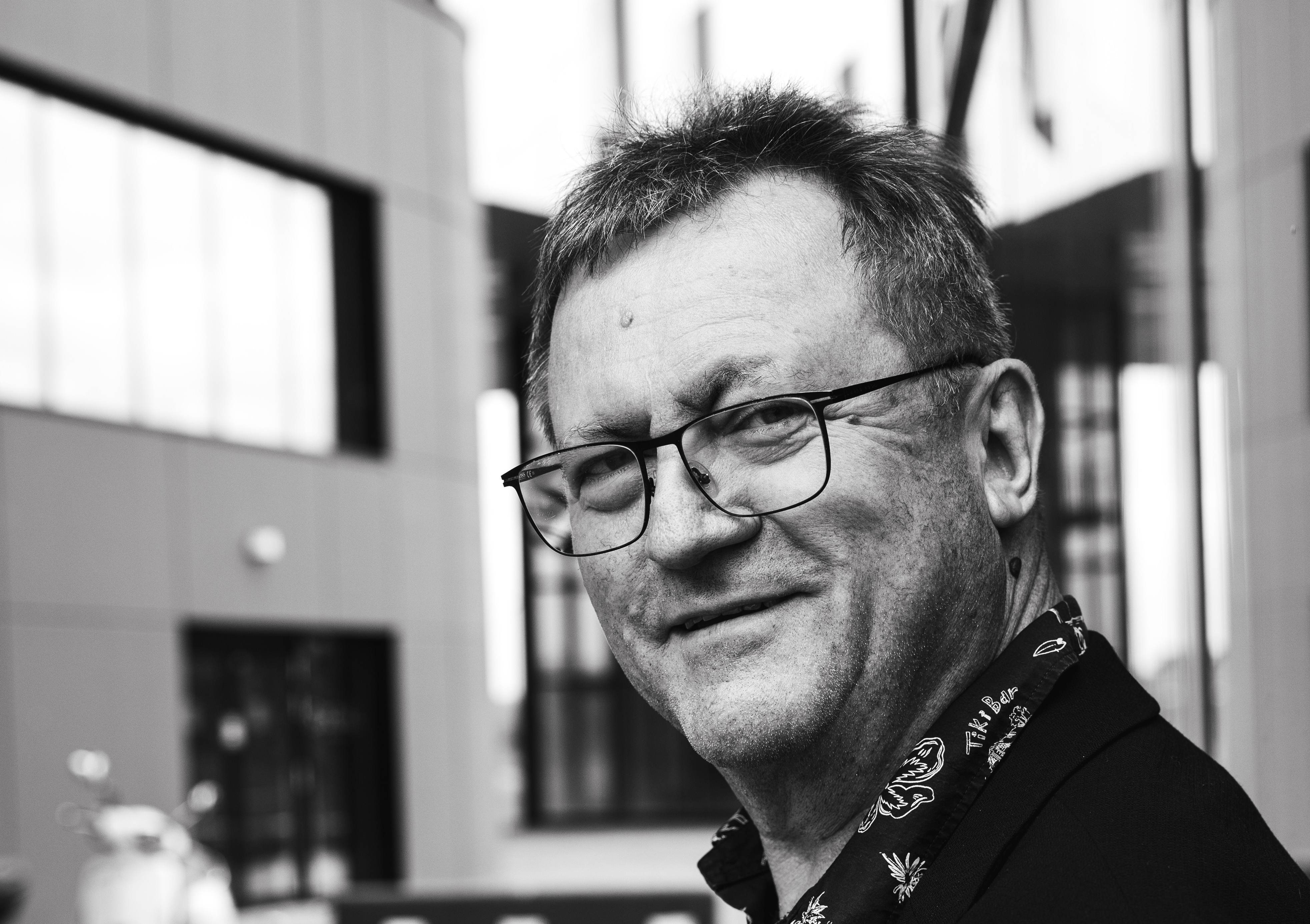
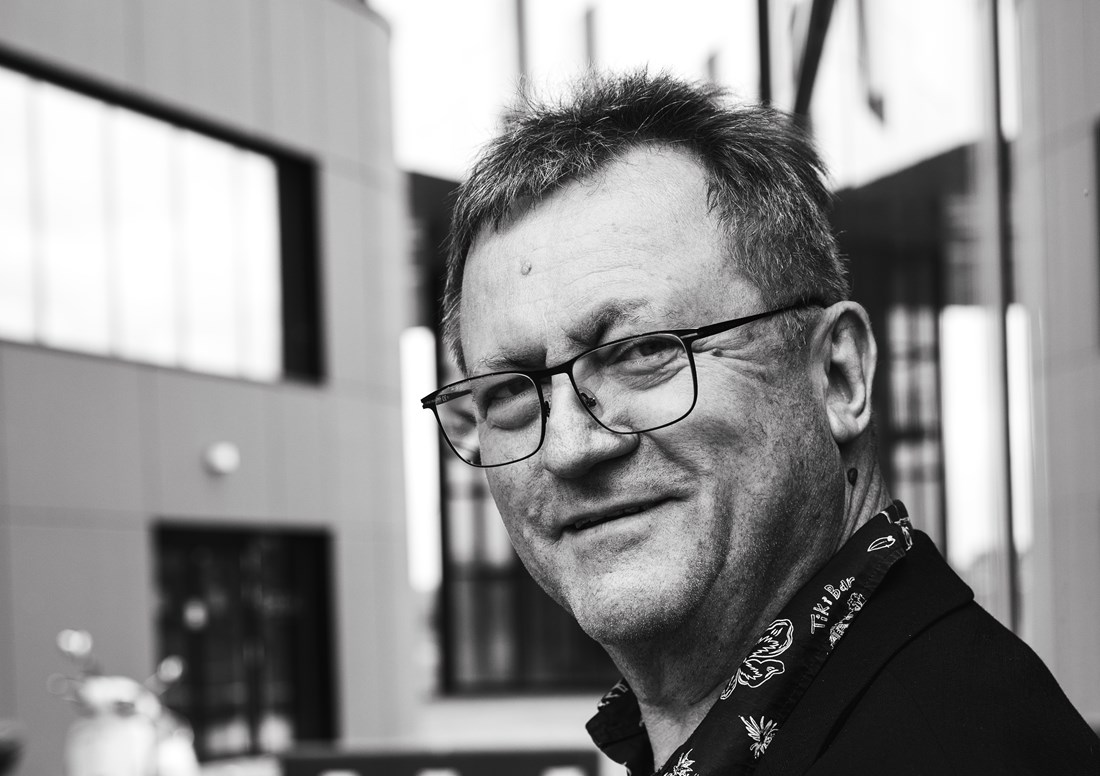
Roy Erling Furre is more than happy to summarise his 40 years as an oil and gas industry employee. The experiences have been many and the development has been significant, across the board.
"My first encounter with the Norwegian continental shelf is in itself a testimony to the development that has taken place on the safety side of the industry," he says.
It was not given that his career would take the direction it did, when he turned up on Ekofisk Bravo on 16 May 1979 as a new catering employee with almost no training, instructions or safety equipment.
Getting involved in trade union matters was not on young Furre's mind.
“It just turned out that way. I became a full-time trade union representative following an embezzlement case in the club. Suddenly, I was chief safety representative.”
The industry has gone from being low status to becoming the most attractive in the country. But it hasn't happened by itself - it has come at a cost.
Turbulent times
OFS was founded in 1977 as the Cooperating Committee for Operator Unions, subsequently known as the Norwegian Oil Workers' Joint Association. Since 2005, it has been called Safe.
It was to this organisation that Furre would devote his working career. He was involved in establishing the fledgling organisation, which was no small task.
He compares OFS to a newly formed political party, taking time to find a common platform and direction.
“I was elected as secretary of the organisation in 1996 and took office during a very turbulent time.”
He describes a period characterized by internal conflict, directional disagreement and the use of instruments to reach goals.
“It was very loud.”
There were not only internal battles. The industry was also caught up in a period of conflict, with numerous disruptive historical strikes, including those in 1990, 1997 and 2004.
The first strikes related to the working environment and safety, inter alia.
The 1990 strike was declared illegal because it did not follow the formal procedures for industrial disputes.
The 1996 strike, aimed at establishing tariff agreements for employees in the ISO trades (Insulation, Scaffolding and Surface Treatment/Painting), unravelled due to internal OFS disputes, with exclusions and a lack of drive to support the strike.
The conflicts led to redundancies and created widespread division within the OFS. Some clubs refused to participate in sympathy actions, which further weakened the cohesion of the organisation.
Sleipner
In the midst of everything, Furre was on board when the speedboat "MS Sleipner" collided with the Store Bloksen reef outside Haugesund on 26 November 1996. The accident claimed 16 lives.
Roy Erling Furre was rescued by one of many boats taking part in the rescue operation. He was found 40 minutes after the accident imploded, 1.8 kilometers from the crash site, suffering from acute hypothermia, and with seawater and diesel in his lungs.
After leaving hospital, he established a support group for those affected. He did this in parallel with demanding union work and personal challenges.
“I was dealing with a divorce, support group work and internal conflicts in the organisation. It was crazy.”
Inner voice
He describes a period where one had to be very vocal to have an impact on the trade union work. The contact points were few, and the battle for attention was huge. But in the 2000s, a change took place.
“The beginning of the 2000s was characterized by great concern for safety offshore, despite no major accident having occurred. The entire industry succeeded in being proactive.”
He describes a period where the trade unions, authorities and employers sat down and discussed the challenges together. This led to the establishment of the Safety Forum, an arena for tripartite cooperation on safety in the oil and gas industry.
“The Safety Forum gave us a platform where we could not only be proactive; it became a place for building trust and common understanding. Not least, the forum became an arena where we could effectively spread knowledge and experience out into the industry.
We must learn from this period,” says Furre.
"When we look ahead at the challenges standing in line, it is important to look at what we achieved back then. It's about being constructive, using the meeting points and using our inner voice.”
The Safety Forum gave us a platform where we could not only be proactive; it became a place for building trust and common understanding. Not least, the forum became an arena where we could effectively spread knowledge and experience out into the industry. We must learn from this period
Future
He has his concerns about the future, including that new forms of operation may erode employee expertise, and that the balance of power between the parties may be altered. He also fears that an individual-oriented safety focus may weaken collective safety.
Furre believes that the years to come will be demanding, and that it is therefore important to see and learn from what was achieved in the early 2000s.
“Tripartite cooperation is vulnerable. Continuous efforts are needed from everyone to preserve it.”
Although it has come at a cost, Furre cannot imagine a life other than in the service of the union.
“It has been very rewarding. We have achieved an incredible amount. The industry has gone from being low status to becoming the most attractive in the country. But it hasn´t happened by itself - it has come at a cost.”
What is Safety Forum?
The Safety Forum is the central tripartite arena for cooperation and debate on important HSE challenges in the Norwegian oil and gas industry and other ocean industries.
The Safety Forum was established in the autumn of 2000 and is composed of representatives from the authorities and the organised groups representing employees, employers and the state.
Read more articles from Dialogue no 2-2025:
Articles from Dialogue no 2-2025
Would you like to receive Dialog in print completely free of charge? Send an email to dialogue@havtil.no and state how many copies you would like.