A JOURNAL FROM THE NORWEGIAN OCEAN INDUSTRY AUTHORITY
Strong as steel
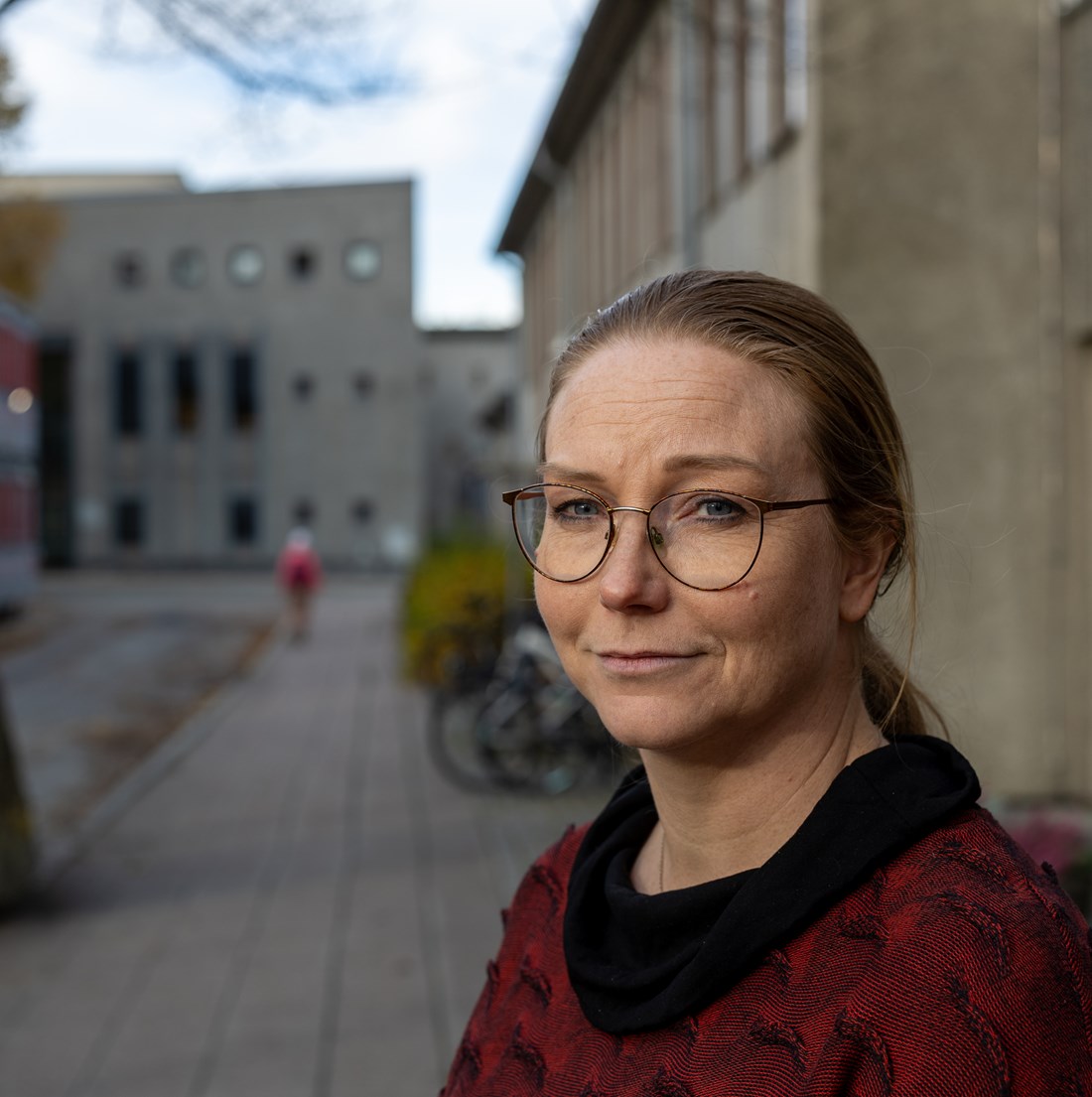
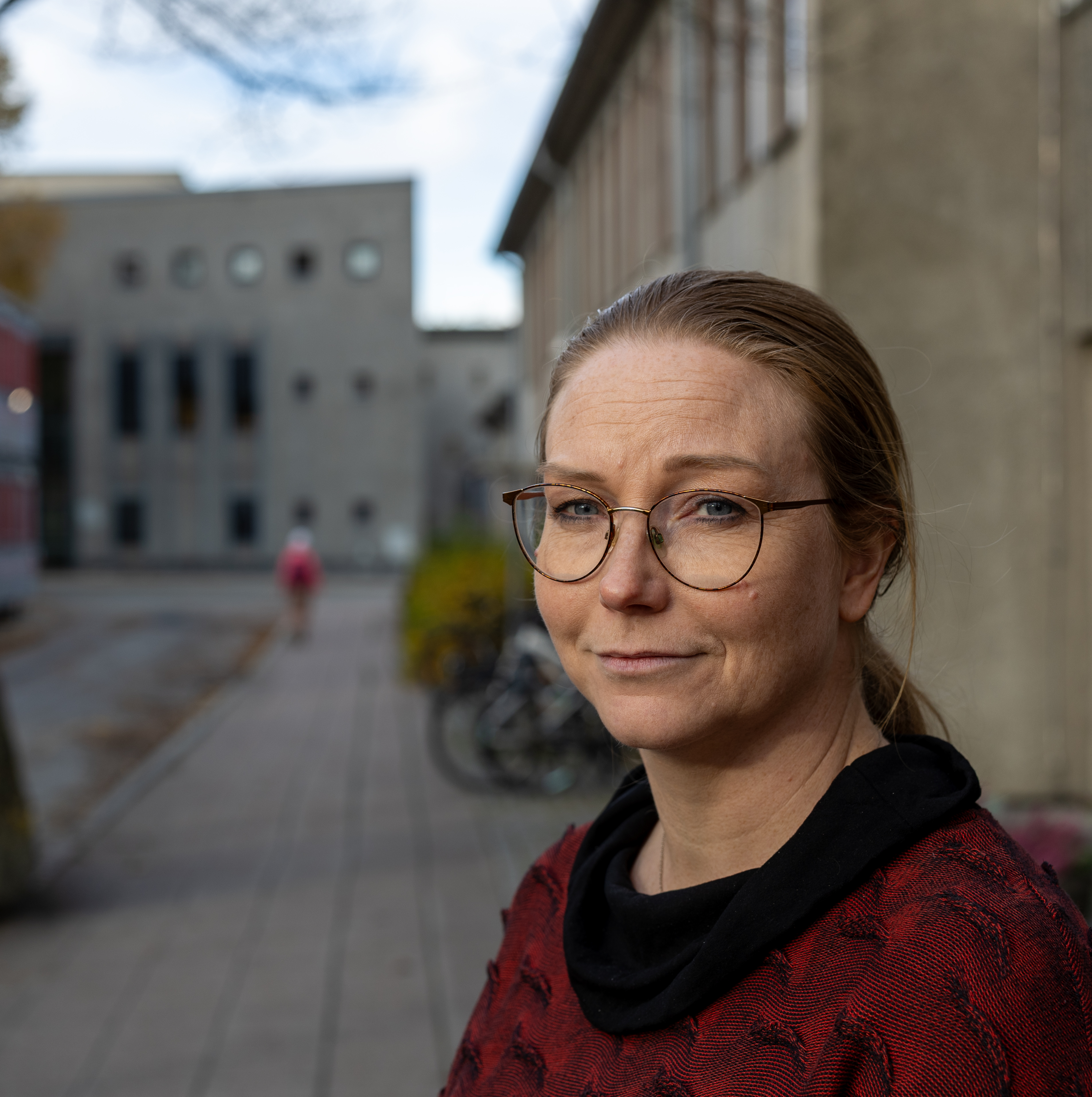
Materials specialist Ida Westermann never ceases to be fascinated by large steel structures, especially the slim and light ones. - If I see one of those, I can either think "oh, this is excellent material", or "this is not going to last".
Published:
05.12.2025
Text: Øyvind Midttun
Photo: Øyvind Midttun
- Structural safety
Westermann is head of department and professor at the Department of Materials Science and Technology at NTNU (Norwegian University of Science and Technology) in Trondheim. She conducts research into how the structure and properties of metals are affected by processing, particularly in steel and aluminium.
- What is steel – simply explained?
- Steel is a combination of iron and carbon. It is the carbon that gives iron its strength and turns it into steel, but only small amounts of carbon are needed - often less than 0.2 per cent for structural steel.
Humans began to understand how we could make and use steel over 5000 years ago, in India and China. One of the oldest archaeological finds we have is an iron plate from the Pyramid of Cheops dating back to around 2500 years B.C. Historically, removing carbon from iron was the greatest challenge.
Oxygen is removed by reducing the iron ore, by smelting or otherwise. When blast furnace smelting with coke, the carbon content will be between two and four percent. If you don't smelt, and produce something called sponge iron, you can reduce the carbon content to between 0.1 and 0.7 percent.
- Besides iron, what impacts the properties of materials?
- First, it is important to remove unwanted elements such as sulfur, phosphorus, and oxygen, which can make the steel brittle or weaken its strength. Alloying elements are then added to achieve the desired properties, such as strength, toughness, ductility, or resistance to corrosion and fatigue.
- How much knowledge do we really have about the properties and about what impacts them?
- We have gathered expertise on these topics over hundreds of years, and some old steel is still in use. But development is taking place constantly, and there is a big difference between the properties of steel produced in the 1960s and the steel produced today. This applies to both purity and to how best use the forming methods to achieve better properties.
- You have worked with materials science and technology for many years. Where did your interest start?
- I grew up in Tønder in Denmark, a small town next to the German border. Hydro also has an aluminium factory there. When I was in high school, I took part in a project as part of my physics curriculum which allowed me to spend time in the lab and become involved in Hydro's production. I found this research area - the properties of materials and what impacts them – fascinating. It tends to be overlooked and insufficiently addressed in general, yet it affects everything we do.
I usually say that as a materials specialist I am an interpreter, with pure chemistry and physics on the one hand and users of materials, such as machinery and structural engineering on the other. We are sitting in the middle, holding the knowledge of manufacturing and forming methods, and why the materials behave as they do.
- You eventually took a PhD in aluminium. Are there major differences between aluminium and steel?
- Although aluminium is quite complex, it is also a little simpler than steel. Steel is fascinating, because we see different types of phase transformations occurring when we raise and lower the temperature. Both magnetism and structure become altered at given temperatures. By understanding the entire process of heating and cooling, we can use it to get the best properties out of the material.
Purity is also highly significant. If impurities such as sulphur or phosphorus are present, they can destroy the properties. Very brittle or soft particles may appear in the steel, resulting in points where fatigue is more prevalent or causing the material to become brittle.
- What do you research the most?
- Here in the department, we place great importance on ferromanganese and ferrosilicon. These products are used in the steel industry all over the world. Although Norway is not a large-scale producer of structural steel, we are an important supplier of alloying elements used in steel production internationally. This is actually one of Norway's largest export industries. Much of what we are researching right now relates to reducing the CO2 footprint from these processes. For example, we are researching the use of hydrogen or plasma as a reducing agent to replace conventional reduction with coke, which releases carbon.
- If you had unlimited resources and total freedom, what type of experiment or research projects would you like to get underway?
- It's all about seeing the big picture. A lot of research is going into metallurgical production processes. My research is more specifically on the application of steel. And it's important to recognise links. For example, if we were to start using hydrogen as a reducing agent, an increase in hydrogen brittleness would be widely anticipated. If I had the funds at my disposal, I might look into the materials of the future, into how we might optimize steel, making it more robust, more durable. Perhaps it might be possible to chemically alter the properties? Often, if you make a small change in one area, it can have a negative impact on another. You don't solve the problem; you just move it.
- What happens to steel structures when they stand in the sea for decades?
- Two things. One is corrosion. There are quite good methods in place for monitoring corrosion, including sacrificial anodes. The other thing, which is more concerning and more difficult to monitor, relates to fatigue. There are forces at play here, such as movements and waves, which in themselves are not so dangerous, but can over time lead to fatigue. Extensive research is going into this topic, especially within structural technology and marine structures. Fatigue needs to be controlled. Good, clean steel materials are of the essence, as is welding quality control, etc. The right choices during the design and construction phases are also paramount.
- Can we bring our knowledge of steel – and experience gained from petroleum activities – into new industries, such as offshore wind?
- This is one of the most exciting areas right now. If we are to produce as much wind energy as anticipated by 2035, and as hoped for by the politicians, we need to speed up - particularly on the production side. There are many challenges on this front, reaching far beyond materials technology. Welding methods, logistics, and restructuring all come into play. In short, we need a holistic utilisation of all the expertise and experience available within oil and gas.
- As a metallurgist, when you walk past a large steel bridge or platform structure, what is the first thing you see?
- Primarily, I am fascinated, and I think most people would recognise that it is a highly complex achievement. In a professional capacity, I may look a little more closely at welding challenges, for example, and notice if something is extraordinary. I might think 'how have they achieved that, is it beneficial, or how will the materials react?'. Again, it boils down to the fact that steel quality is better than it used to be, because we've managed to optimize its properties. This means that slimmer and lighter structures can now be built. If I see something like that, I can either think 'oh, this is excellent material', or 'this is not going to last'. Most likely, the material has become so superior that you can achieve more in a safe manner, but the margins may also be smaller.
Glossary
Structural Steel: Steel used in structures, bridges, offshore structures, and other load-bearing infrastructure. Has a low carbon content (often less than 0.2%) and is designed for strength, toughness and malleability.
Stainless steel: A type of steel containing at least 10.5% chromium, which offers good resistance to corrosion. Used in everything from kitchen equipment to offshore and medical equipment.
Alloying elements: Metals that are added to steel to alter properties, such as strength, corrosion resistance, or toughness. Examples: manganese, silicon, chromium and nickel.
Special steel: Steel developed for specific purposes with additional requirements for properties such as heat resistance, wear resistance, magnetism or chemical resistance.
Sponge iron: Porous iron with a low carbon content, produced without smelting. Used as a raw material in steel production.
Fatigue: Material failure that occurs over time with repeated stress, even if the load itself is not great. Important in offshore and marine structures.
Corrosion: Degradation of metal by chemical reaction with the environment, often water and oxygen. Can be countered with stainless steel, coatings or sacrificial anodes.
Ductility: The ability of a material to deform plastically without breaking. A ductile material can be stretched, bent or shaped without cracking. High ductility is important in structures that must withstand loads over time and provides increased safety against sudden breakage.
Alloying elements
Ferromanganese (FeMn): Iron alloy with manganese, used as an additive in steelmaking to improve strength and hardness.
Ferrosilicon (FeSi): Ferrous alloy with silicon, used to improve the properties of steel and as a reducing agent in production.
Chromium (Cr): Provides corrosion resistance, especially important in stainless steel.
Nickel (Ni): Increases toughness and ductility, stabilizes austenite, and improves corrosion resistance.
Molybdenum (Mo): Enhances strength at high temperatures and improves resistance to pitting corrosion.
Vanadium (V): Increases strength and wear resistance, often used in tool steels.
Titanium (Ti): Binds unwanted elements such as nitrogen and carbon, improving corrosion resistance.
Copper (Cu): Provides moderate corrosion resistance and improves formability.
Important microstructures
Austenite: A structure that forms at a high temperature. Non-magnetic, with good formability. Austenite is stable in stainless steel with a high content of nickel and chromium and offers good corrosion resistance.
Martensite: A hard and brittle structure that occurs when austenite cools rapidly (hardening). Provides high strength and hardness, but low ductility. Used in tool steel and components with wear resistance requirements.
Ferrite: A soft and tough structure found in ordinary carbon steel at room temperature. It is magnetic and has a low carbon content. Provides good formability, but lower strength than martensite.
Bainite: A structure formed by moderate cooling of austenite – between the velocities that yield perlite and martensite. Combines strength and toughness and is used in steel with requirements for wear resistance and fatigue properties.
Articles from Dialogue no 2-2025
Would you like to receive Dialog in print completely free of charge? Send an email to dialogue@havtil.no and state how many copies you would like.